The humans of Iorth are as varied and complex as humans found on Earth. They have a wide variety of traits that, over the centuries, have been distributed globally due to trade, travel, and conquest. Initial communities of humans, during the time before the Great Empire, tended to have human cultures based on their immediate environments, with typical physical features for humans indigenous to that region. In general, these groups were referred to by their regional demonym: Estlander, Norlander, Sudlander, Veslander, or Heartlander.
However, with the establishment and dominance of the Great Empire for two millennia, the term “Heartlander” lost its original meaning of humans native to the Heartlands. With the intermingling of peoples and cultures across all human lands, a new diverse yet unified group of people became the norm for a typical Heartlander. The rise of this group is one reason for the widespread use of standardized systems throughout much of Iorth, and for the prevalence of their language, now simply known as the Common Tongue or Common.
As such, humans encountered on Iorth have appearances just as familiar or diverse of any of those humans encountered on Earth. The “Heartlander” demonym is rarely used, except by small isolated groups who still appear and identify as one of the other four old communities of humans. Other human languages once spoken in Iorth are now extinct languages, while the major regional languages of Estlish, Norlish, Sudlish, and Veslish are dead languages.
While the humans of Iorth may associate with various nations or polities which exist in the absence of the Great Empire, distinction of groups based on culture or appearance has fallen by the wayside. This is due to the active sense of unity promoted by the Great Empire, who in turn learned lessons from older and much more stable cultures such as those of the dwarves and elves.
To provide a general sense of progress achieved by the humans of Iorth, some comparisons will be made between them and cultures of Earth’s past. First and foremost, while society has access to inventions such as the coin mill and the printing press, and even access to crucible steel (thanks to the superb skill of dwarf metalworkers), they do not have access to firearms. Though the devices could be crafted, their utility and appeal is significantly decreased due to the presence of magic.
The vulnerability and volatility of gunpowder in a reality capable of creating intense flames or other primal elements makes the propellant unreliable and dangerous. Furthermore, initial attempts at the creation of the cannon for use as a weapon were spectacularly and horribly ruined when, after an initial success of breaching a fortress, the cannon suffered a catastrophic failure after it was engulfed in the flame of an aggressive young red dragon. The intense heat of the dragonflame melted the cannon, effectively sealing the barrel, and the heat and trapped air allowed for ignition of the gunpowder, turning the compromised weapon into a large fragmentary explosive. This experience, along with the revelation that any stores of gunpowder for such weapons could easily be compromised by any number of means of equivalent threat, promptly ended any further development of firearms. The only remaining use for gunpowder is either as spell components, or for use as fireworks or simple explosives.
However, some types of emerging technology (whether created by humans or by gnome innovators) include the telescope, compound microscopes, slide rule, mechanical calculator, and the pendulum clock. Otherwise (with the exception of gunpowder), most humans have access to technology typical of 15th to 16th century Earth.
Though magic is present in the world of Iorth, it is not heavily used or relied on by the human public at large. In many instances, this stems not from a taboo or suspicion of magic, but a matter of availability of practitioners. The study and practice of arcane magic for a wizard, artificer, or bard demands a substantial investment in time that is considerable for humans (given their lifespans). On the other hand, establishing a pact with a potent entity in exchange for power is viewed with dread and suspicion by many. Whether harnessing primal magics or divine power, intense focus and faith in one of the main religious philosophies is necessary for clerics, druids, paladins, and rangers to use those gifts. As a result, those born with an inherent gift for arcane magic (such as sorcerers) are the most commonly encountered variety of magic users.
Furthermore, there are far fewer spellcasters able to use some of the more potent magics of their means compared to initiates capable of simple or foundational spells. The public at large does not have an expectation, much less an idea sometimes, of accessing magics that return the dead to life, or enable instantaneous travel across massive distances, much less creating materials or objects out of nothing. Only grand metropolises, such as Coppergate or the Free City of Rigby, would have public works innovations such as magical streetlights present, as opposed to relying on simple lanterns or torches, or even expecting the public to provide its own light for traversing the community at night. Therefore, the concept of shops selling magical items or providing magic services is generally unknown in human societies.
Even though the Great Empire is in ruins, its legacy can still be seen and felt in countless human communities. Roads created by the Great Empire are still used for trade and travel. The coins used in all nations use the standards and weights established by the Great Empire, and are still made by the Coin Guild. The Common language is the native language of humans, and the names of many towns follow the naming methods practiced by the Great Empire. The orders of nobility, the organizations of administration, military, and many other elements of society are derived from the practices and standards of the Great Empire.
Though significant human communities reside in the Estlands, Norlands, Sudlands, Veslands, and beyond, the largest concentration of human settlements are in the Heartlands. The nations of Aland, Iland, and Uland—the original three nations that formed the Great Kingdom, which later became the Great Empire—still have the largest populations of any human communities on Iorth.
While human communities generally interact well with non-human neighbors (on average), suspicion and sectarianism generally impede peaceful cooperation between human communities and nations. The nations of Aland and Uland are not openly hostile with each other, but it would not take much to lead them into open conflict. The nation of Iland tries its best to remain neutral while also not provoking other nations to hostility against them. The nation of Œland faces threats from not only its southern neighbors, but also the schemes of the totalitarian Archduchy of Hellport to the west. The pirate haven of Covestead harasses all ships in the ocean, regardless of nationality, but also does its best to evade privateering by ships from the Palatinate of Upton. As a result, many non-human nations actively avoid associating with many of the human nations for concern of getting dragged into their rivalries and conflicts.
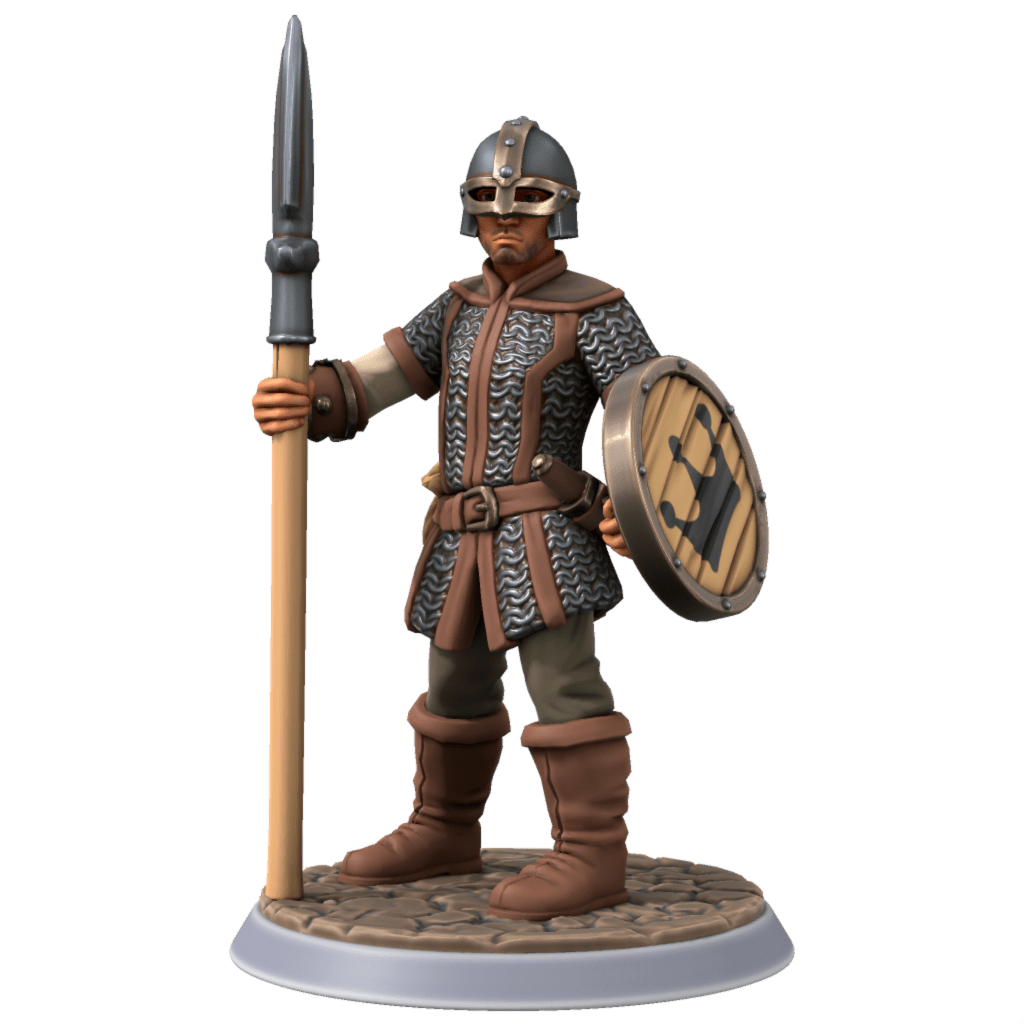
One practice of the Great Empire that several human communities maintain is the presence of a standing professional military. In some nations, this force is composed of citizens completing a mandatory conscription period, whereas in others it is wholly staffed by a voluntary force. Due to this, many human communities maintain stockpiles of munition arms and armor for use by its forces. Typical types of munition armor are mail shirts or breastplates, often complemented with helmets and shields, while typical types of munition arms include spears, daggers, short swords, hand axes, maces, slings, shortbows, and light crossbows. In some instances, where community members may be supplied arms and armor from a community stockpile in a time of crisis, a simple spear and shield may be issued, with potentially padded or hide armor also available for protection, and shortbows or slings supplied for ranged weapons.
There is no one consistent method of governance used by all of the human communities, though there are certain methods that tend to be used. In some instances, a community may be governed by an elected official or council. In other instances, a local noble may hold reign over an area, or a member of nobility may rule in service to a sovereign of a nation. In the case of the nations of the Heartlands, many of the human nations follow the traditions typical of the Great Empire.
Human communities tend to be the most diverse communities found in Iorth, since they are welcoming to trade and innovation. In many instances, humans meet many non-humans as traders or travelers in human settlements (conversely, it is less likely for non-humans to encounter humans in non-human settlements). Nations such as the Kingdom of Wyland and the Free City of Rigby have such diverse populations as to be considered mixed communities overall, while many other nations are dominated by humans but are accommodating to non-humans.
The prevalence of humans in Iorth can also be seen in the various lineages that may be encountered. Tribes in the more wild reaches of the lands have members who are werebeasts, as well as a fair number of members with werebeast ancestry. Humans, as well as many other folk in Iorth, are likely to have traces of celestial, fiendish, fey, giant, or elemental heritage that can reveal itself over time. While some may regard these individuals as something more than human, general consensus by many sees them simply as just another variety of human. In some instances, these traces of inhuman heritage as seen as a quintessential element of the identity of some human groups. For example, many Norlanders do not just focus on the stereotypical appearance as being essentially Norlander, but also displaying traces of water elemental ancestry as well. The same goes for Sudlanders in regards to fire elemental ancestry, Estlanders and air elemental ancestry, and Veslanders with earth elemental ancestry. Many prominent families in positions of influence and power in those regions have elemental ancestry which frequently is seen in their lineage.
One infamous human community with inhuman ancestry is the serpentkin. These individuals are descendants of an ancient serpent cult who, per their legends, received “blessings” from their patron in the form of serpentine attributes. Some extremely devout members of the cult were provided even greater serpentine attributes, resulting in the creation of creatures such as serpentfolk, nagas, and gorgons. The serpentkin dwell on the isolated island of Koatlan in the southern hemisphere of Iorth, but they actively work to infiltrate other human communities in an effort to undermine or corrupt them from within, in order to spread the influence of their cult. A few serpentkin have fled Koatlan to escape the cult, and they still revere the ancient celestial serpentine beings known as couatls that originally inspired their community, though they remain secretive due to the horrible and prevalent presence of their more aggressive and baleful kindred.
Humans are considered to be one of the younger peoples of Iorth. Whereas the giants, dwarves, and fey are seen as among the first peoples, the humans rose to notability after the glory days of the dwarves and elves were long over. Per legend, the humans were beings created by the god of the heavens, light, and order, An. Humanity on Iorth tends to refer to itself as “mankind,” and their legends claim that the very word “man” means “progeny of An,” or “the children of An.” In earlier times, many human cultures directly worshiped An and many other demigods, but with the rise of the philosophical religions such as the Path of Light, the Path of Nature, or the Path of Awareness, the focus has changed from revering an entity to revering and exemplifying ideals and outlooks. Many elements from the various older practices appear in these religions, but the faithful are aware that they focus on the ideas rather than the individuals.
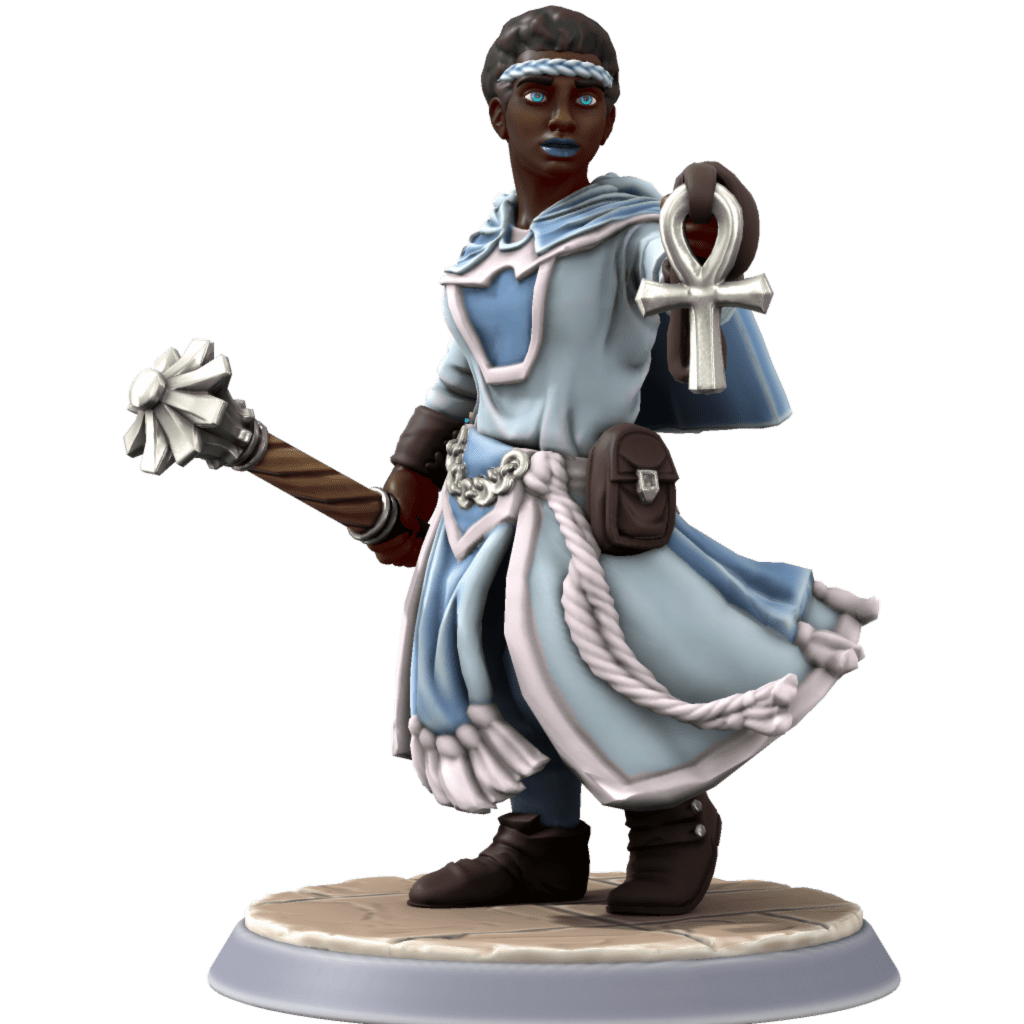
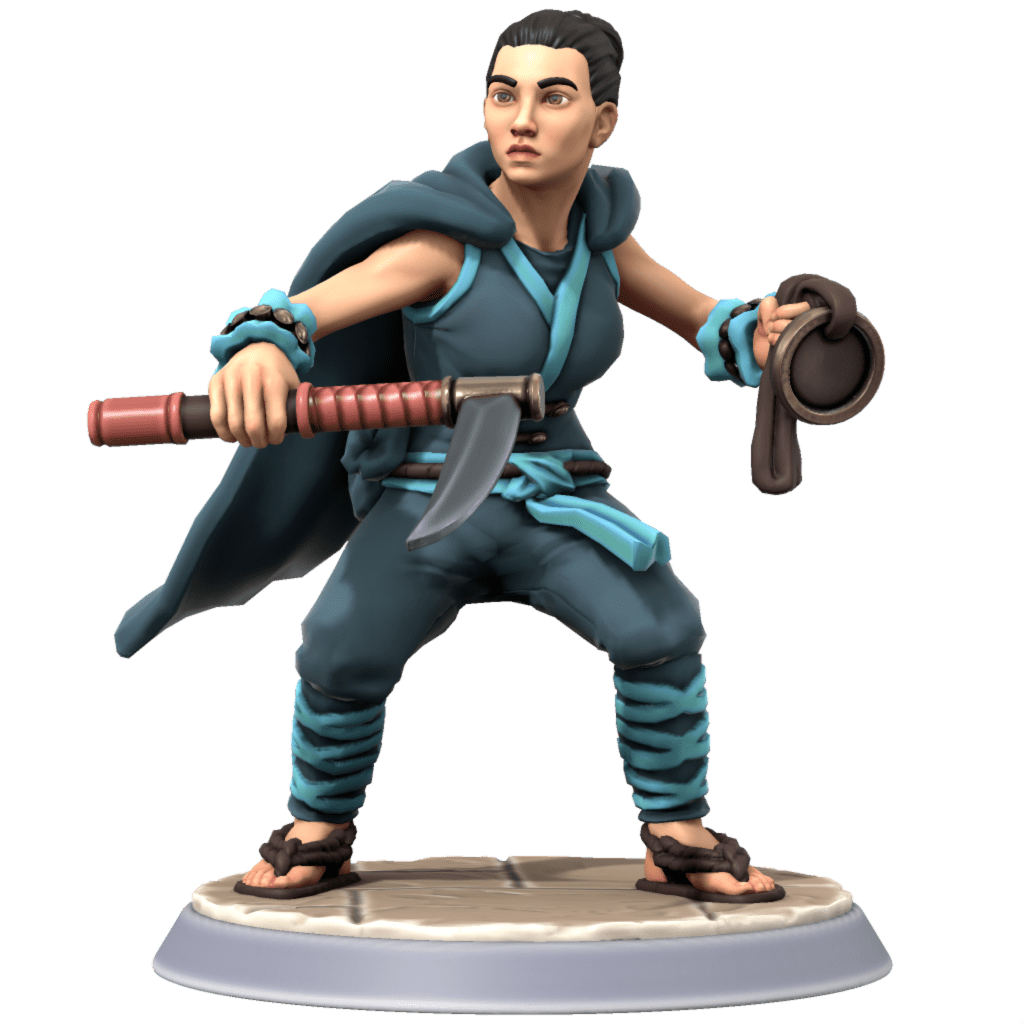
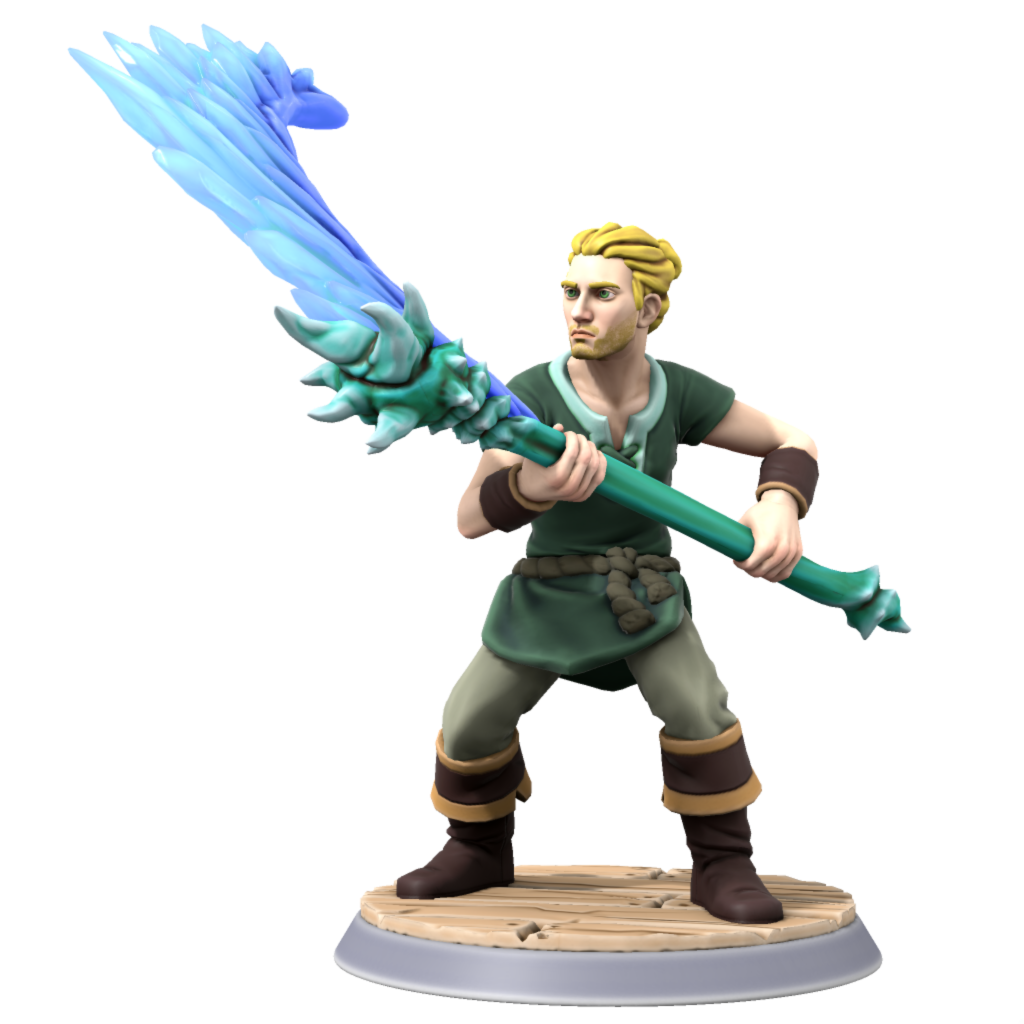
Overall, the humans of Iorth are as diverse and unique as any of the humans encountered on that far-away world of Earth. They have immense potential and creativity, though they are divided on their values and viewpoints of the world around them.
Gallery
 Iorthbound