
Dwarves are one of the first groups of beings to occupy Iorth since prehistory. Distantly related to the giants and their titan forebears, dwarves are hirsute, stout, sturdy folk who are between 4’ and 5’ in height. Dwarves have a broad range of traits akin to humans. Many dwell in massive subterranean communities known as dwelves.
Despite having multiple communities and clans spread throughout Iorth, all dwarves speak the same language: Dwarvish. In many instances, particular dialects of Dwarvish indicate which community a dwarf may come from, but the differences are minor enough to ignore overall. Dwarvish descended from the language of the giants, and it uses the same rune-like alphabet used by giants, though lacking all of the diacritic marks used in the written script. The alphabet is a direct, phonetic alphabet, possessing no multigraphs. The language itself is very formal and precise, having no homonyms, irregular verbs, or other features that may create confusion for a speaker or reader of Dwarvish.
While the majority of dwarves are of a mixed heritage, there are a few communities that have maintained their clan structure and heritage. Clan dwarves tend to have particular traits notable for members of those families. However, the requirements and restrictions for a group of dwarves to be considered a clan are exceedingly stringent. The hallmark of a clan dwarf’s appearance, other than having one or more of the characteristic physical traits of the clan, is the unique kilt that only dwarves of that clan wear. It is seen as a severe affront to the clan and to dwarves in general if a non-member of the clan is seen wearing a clan kilt. Friends or allies of a dwarf clan may wear another item that incorporates the clan’s tartan within it, such as a cloak with a tartan lining or a sash, but the clan kilt is reserved strictly for dwarf members of the clan only.
These severe strictures for dwarf communities to be deemed part of a clan has meant that many dwarven clans have failed to still meet the requirements and restrictions expected for a clan, and thus have become a “lost” clan. Sadly, the amount of lost clans far exceeds the number of existing clans in Iorth. As such, only three clans of established and continued heritage still exist in Iorth: the ruling Forgecrown clan, and the noble Bloodaxe and Bluestone clans.
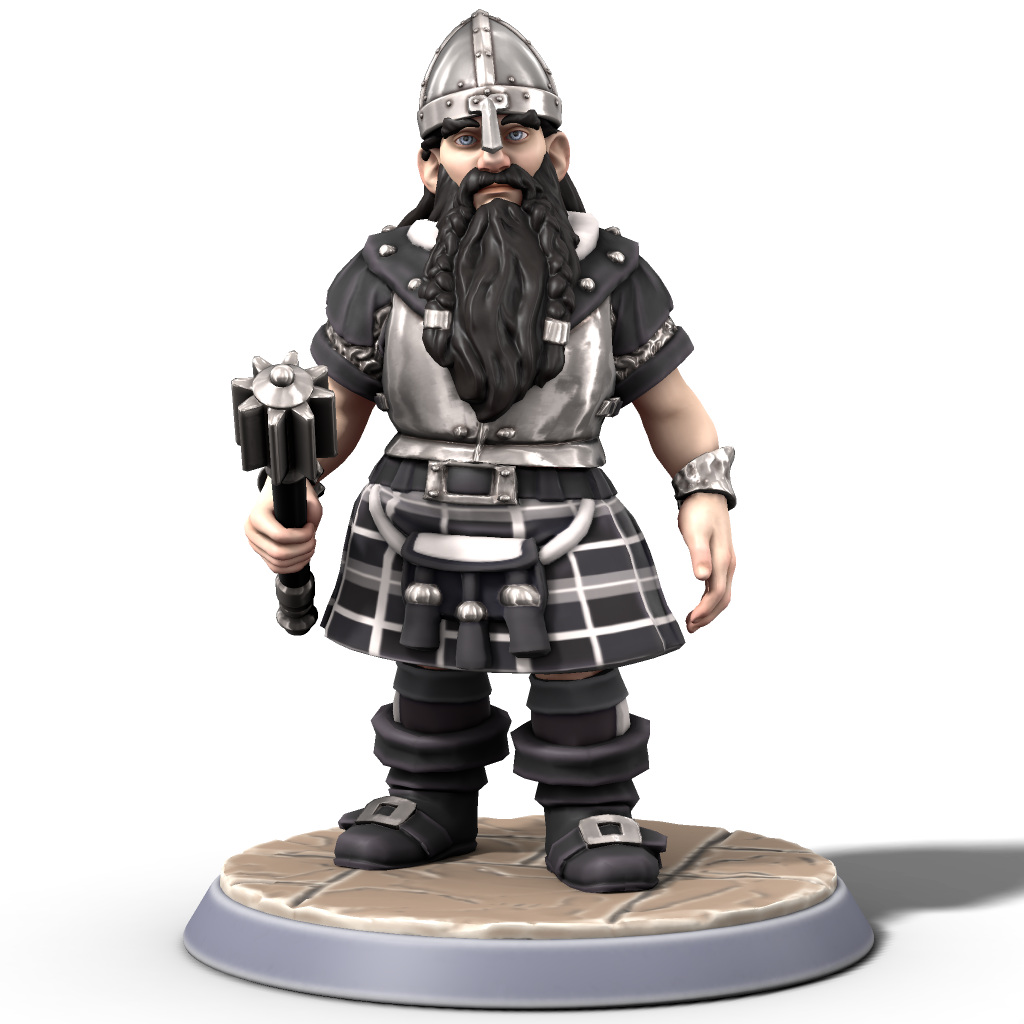
The dwarves of the Forgecrown clan typically have light complexions, with jet black hair and gray eyes. They wear a kilt with a simple black and white tartan. The clan prefers to use black-and-white onyx gemstones in their jewelry. Since this clan is the ruling clan of the Great Underground Jarldom of Dwyrheim, the colors black and white by themselves are often considered to be reserved for use by the jarl’s clan and jarldom’s officials. Their home is also the capital of Dwyrheim: Bergburg.
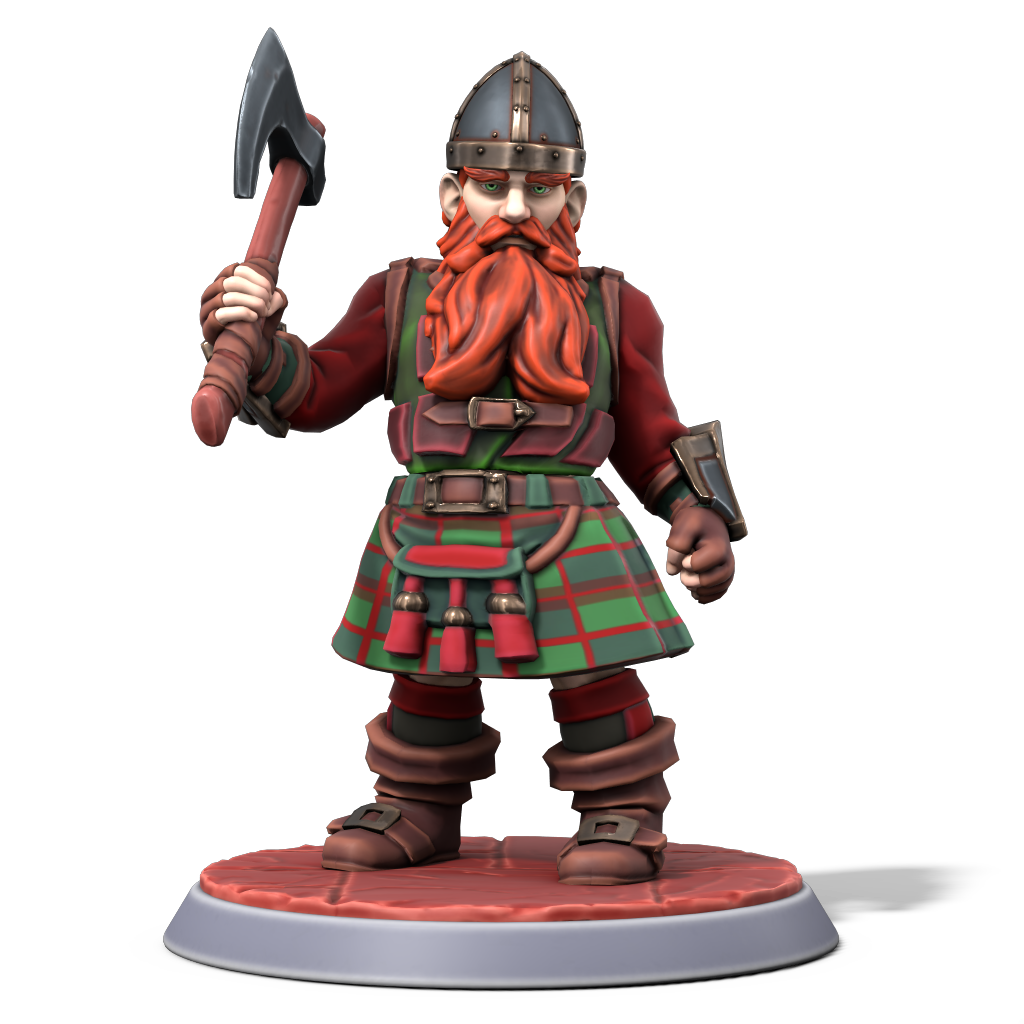
The dwarves of the Bloodaxe clan typically have ruddy complexions, with fiery red hair and bright green eyes. They wear a kilt with a simple red and green tartan. The clan prefers to use bloodstone gemstones in their jewelry, and many favor axes as a personal weapon. Based out of the dwelve of Bludburg, the Bloodaxe clan is renowned for being the fiercest warriors of Dwyrheim, and they are known to focus heavily on concepts of order, legality, tradition, and honor (to the degree of being a detriment, in some instances). These attitudes naturally lead the Bloodaxe clan to often clash with others, especially members of the Bluestone clan.
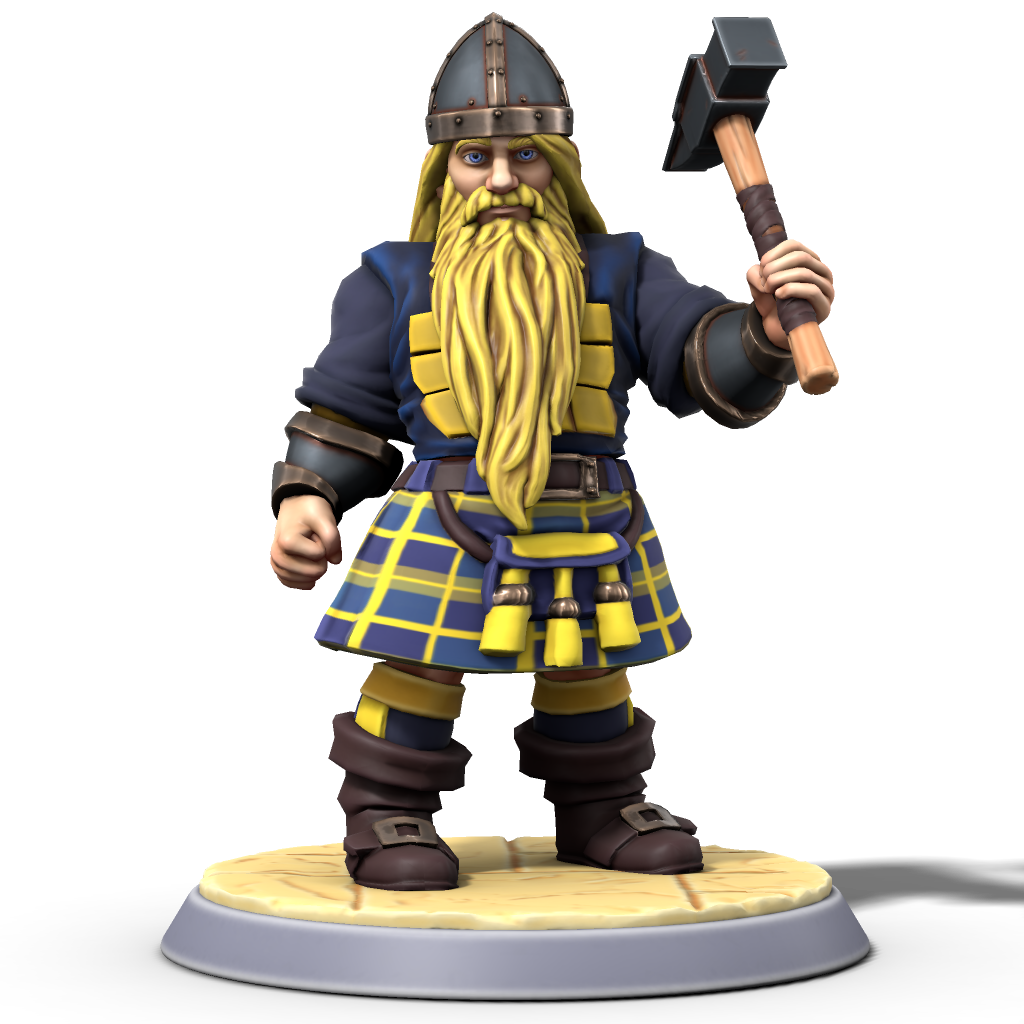
The dwarves of the Bluestone clan typically have tanned complexions, with vibrant blond hair and bright blue eyes. They wear a kilt with a simple blue and yellow tartan. The clan prefers the use of lapis lazuli gemstones in their jewelry, and many favor hammers as a personal weapon. Based out of the dwelve of Stanburg, the Bluestone clan are the best crafters and artisans of Dwyrheim, and are sought after for their superb goods. The Bluestone clan strongly believes in doing what’s right, honest, and good above all else, even if that may mean compromising or ignoring dwarven laws or traditions. As such, the Bluestone clan often finds itself at odds with the traditionalistic Bloodaxe clan.
Furthermore, the Bluestone clan is known for its compassion for taking in the surviving few members of the lost Coastrig clan, since the old, long-lost home of the Coastrig clan, Ridgeburg, has become the Free City of Rigby. Due to their proximity to the elven realm of Eldor, the dwarves of the Bluestone clan are known to be friends to fey and elves.
In contrast to the hereditary clans, there have been a few clans of dwarves created by decree of the Jarl as service clans. Services clans are dwarf clans whose founding members consist primarily of dwarves adopted into the clan instead of born into the clan. All of these dwarves were considered clanless until their adoption by the service clan. As such, these dwarves do not have particular lineages or traits typical of their line, and appear indistinguishable from any clanless dwarf, barring the clan kilt all tend to wear. There are two well-established service clans that are well-known throughout Iorth: the Warshield clan and the Wyrmwright clan.
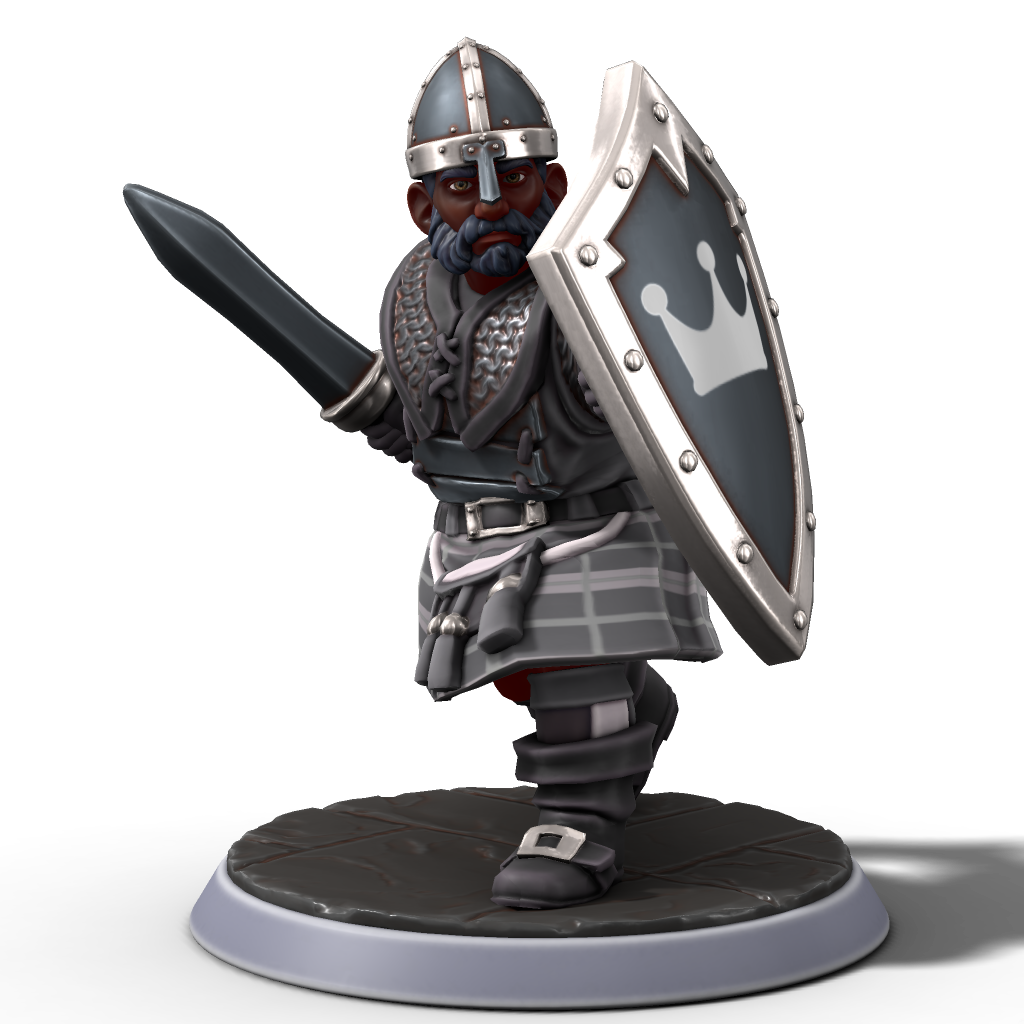
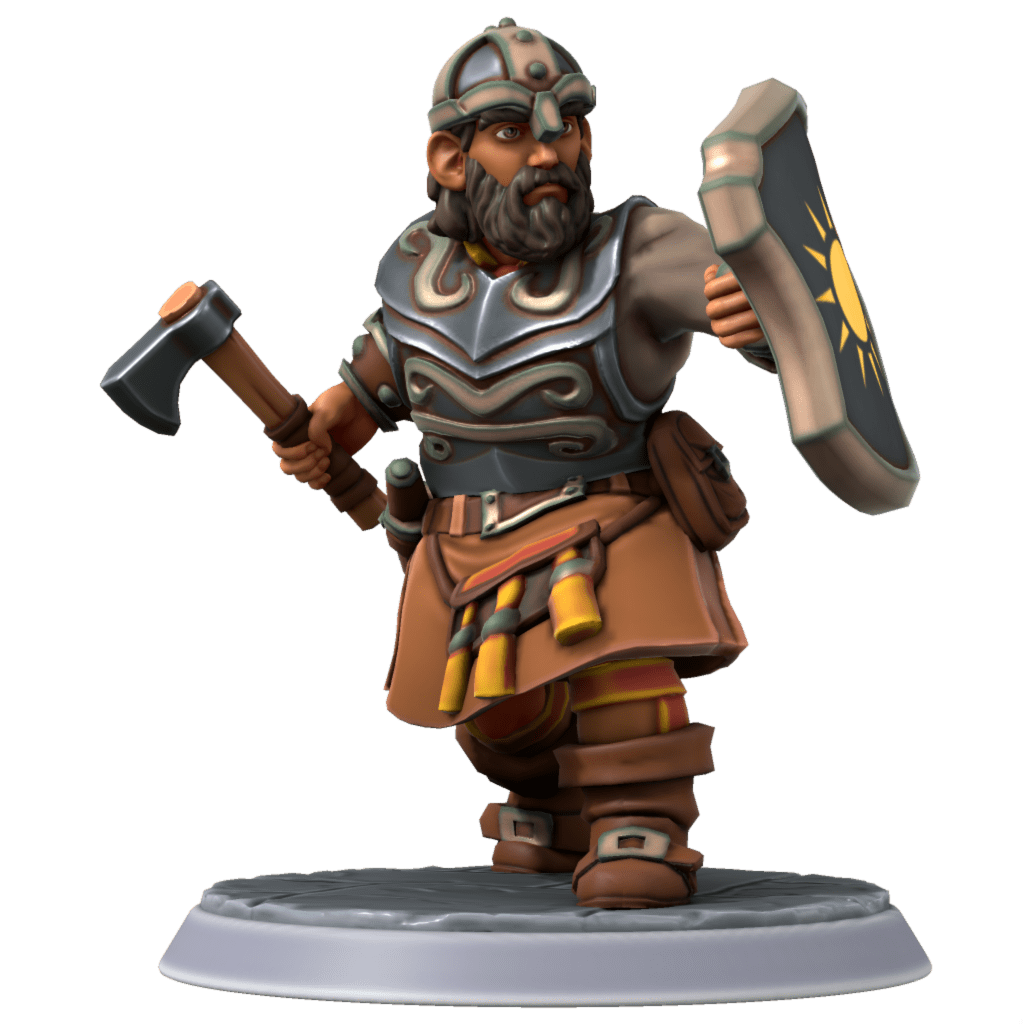
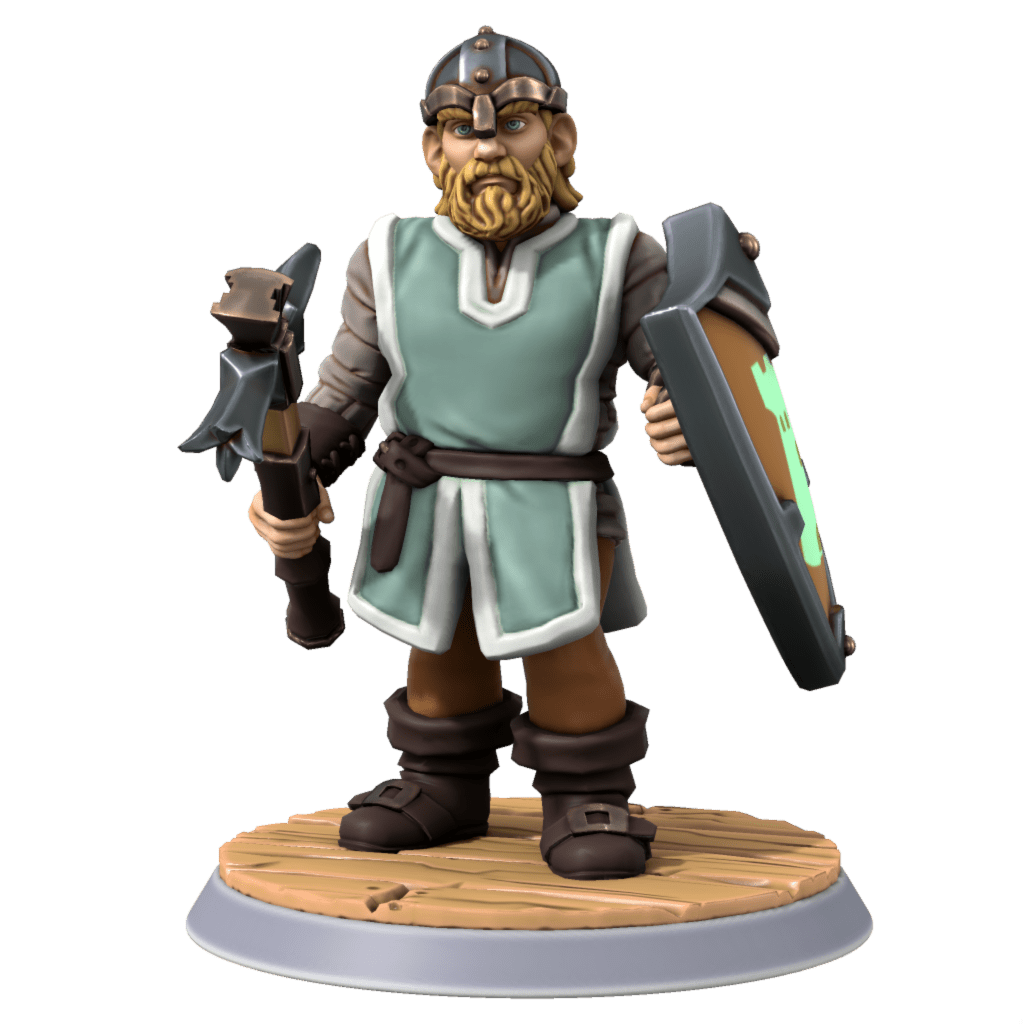
The Warshield clan is a service clan sworn to the Forgecrown clan. Their simple clan tartan of light grey and dark gray is meant to represent their seclusion from the politics and strife typical between clans, and instead symbolize their devotion as guardians and enforcers for the Forgecrown clan. The Warshield clan is affiliated strongly with the army of Dwyrheim, as well as security and operations in the grand dwelve and capital of the jarldom, Bergburg. Shields are commonly used by members of the clan, especially since they regard themselves as shields against harm and the ruling Forgecrown clan.
The Wyrmwright clan is a displaced clan that resides in the Farlands in the southern hemisphere of Iorth. These dwarves were settlers of southern lands who found themselves under the threat of attack and invasion by the powerful dragon-ruled nations of the Wyrmleague. In order to prevent tragedy, these dwarves made a pact with the dragon lairds of the Wyrmleague and the Jarl of Dwyrheim.

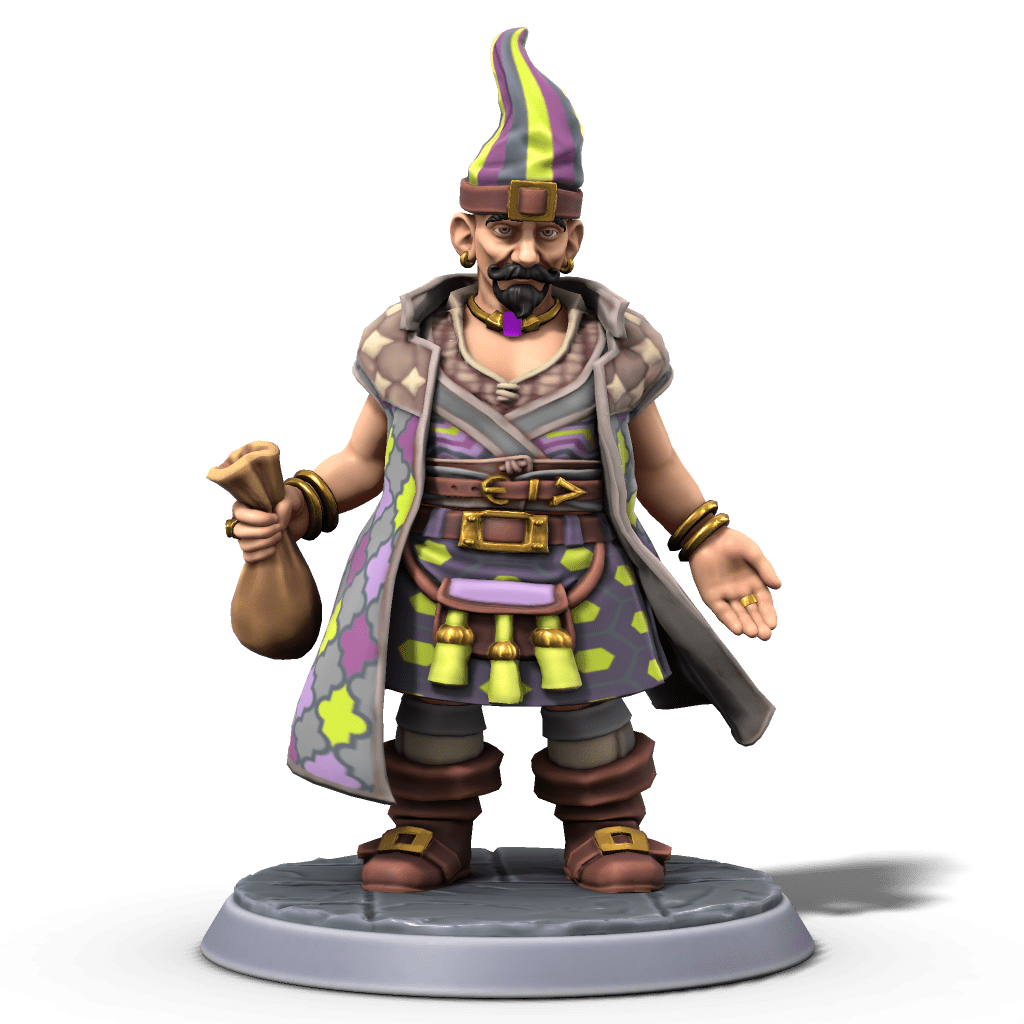
Though technically an independent clan, this clan crafts great, powerful, and beautiful treasures for dragon hoards, whether using new precious treasures, or reworking some small portion of the treasure of a dragon’s current hoard. The dragon lairds swore to place the clan under its protection, and swore not to cause the clan to be involved in the scheming or feuding of any dragons, whether themselves, any of their subjects, or any rogue outsiders. Furthermore, the Wyrmwright clan agreed to have some of its members serve as diplomats and merchants to travel to other realms in service to the Wyrmleague. To represent their service, the clan uses a complex tartan for their kilts, bearing the white, black, green, blue, red, and yellow colors of their dragon lairds artfully woven together.
The lost clans of dwarves do have some surviving members, but not enough for the clan to be considered intact. The dwelve of the Coastrig clan eventually became the metropolis now known as the Free City of Rigby. The dwelve of the Rockwall clan is the dwarf-led fortress of Wallburg in the Kingdom of Œland. The dwelve of the Burgmoors clan is now known as the dungeon called the Dankvault. And, the oldest settlement in all of Iorth, the ancient dwelve of the Scarbrow clan, gives its name to the fortified settlement of Skara Brae in the Kingdom of Wyland.
In the distant Farlands of the southern hemisphere, the dwelve of the Icebeard clan, Iceburg, serves as a fortified trade hub for all peoples. Though considered a “lost” clan, these dwarves do their utmost to preserve their heritagr and traditions, especially when compared to the perceived “submissiveness” of the Wyrmwright clan to the dragons. The Icebeard clan prize themselves as giant slayers, and many tales regail their triumph over their ancient frost giant overlords.
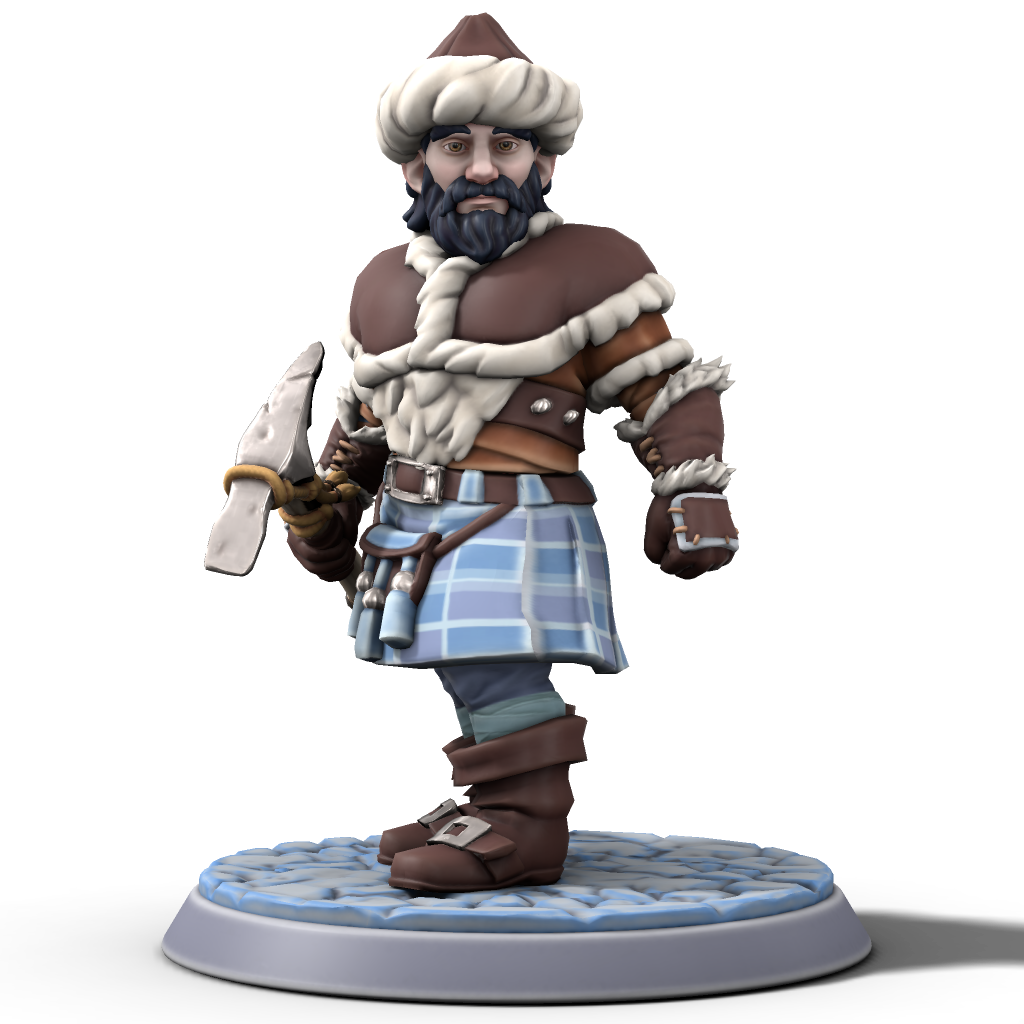
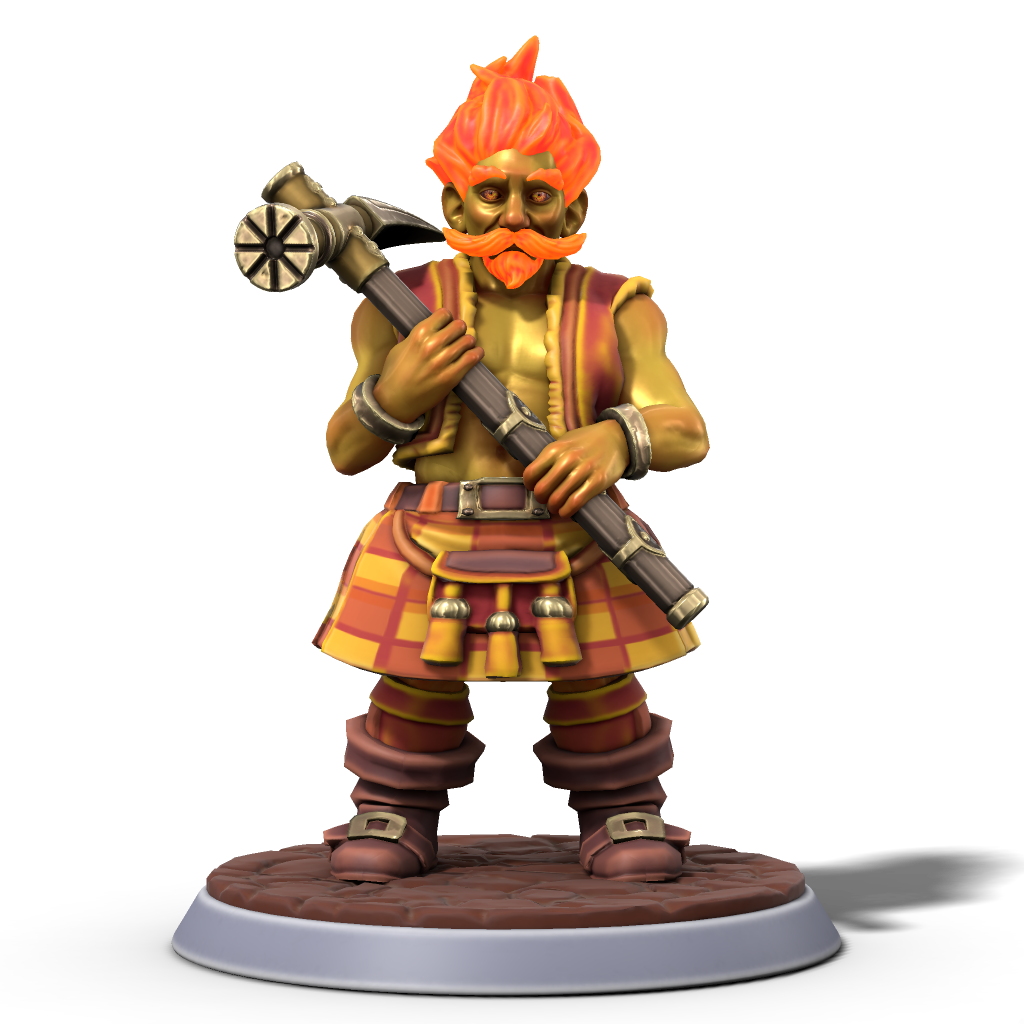
One ancient dwarf clan, the Brassneck clan, sought to embrace the primal elemental power of the fire giants who once ruled over them. As a result of their endeavor, they transformed into something new, and left Iorth to dwell in another dimension. Though their story and history is forgotten by most, the dwarves of the Brassneck clan, now called either forgesaints or azer, dwell on a fiery demiplane drifting through the Astral Plane.
Beyond the few surviving clans and the service clans, there is one clan of dwarves that are deemed dishonorable and malign: the Leadfist clan. This outcast clan of dwarves is known by its solid gray kilt lacking any visible pattern, as well as by their typical appearance: an unhealthy complexion, often turning gray or turned gray from generational habitual consumption of lead; a malnourished overall appearance; bloodshot gray eyes; ghostly thinning gray hair; a neckbeard or chin curtain style beard, if they have any; and a preference for pickaxes or mattocks as weapons, often using some sort of poison.


Their numbers are extremely few and far between, and there are rumors of the ruling family of the Leadfist clan having gained strange powers through further inbreeding and mutation. However, the legacy of the Leadfist clan for most lies not in the few surviving dwarves of the clan, but in their twisted mixed-heritage light-loathing subterranean descendants: the derogar, or troglodytes. These deep-dwelling peoples devote themselves to making pacts with ancient and wicked entities, as well as dominating the subterranean amphoibious beings known as the deeplings.
Beyond this, the vast majority of dwarves are deemed to be clanless or “free” dwarves. These dwarves may reside in a dwelve with clan dwarves, or they could reside in an above-ground community of their own or of another culture. These dwarves may choose to wear a kilt out of tradition, and even have a lost clan tartan on their kilt to indicate ancestry. However, there is no obligation for them to wear kilts at all, and some ignore the tradition and wear more practical clothing items instead. However, whether or not a free dwarf has any regard for the kilt tradition, they do respect and abide by the restrictions that bar the use of a clan tartan by anyone outside of the clan. (Those dwarves who do not are often regarded with suspicion and distrust.)
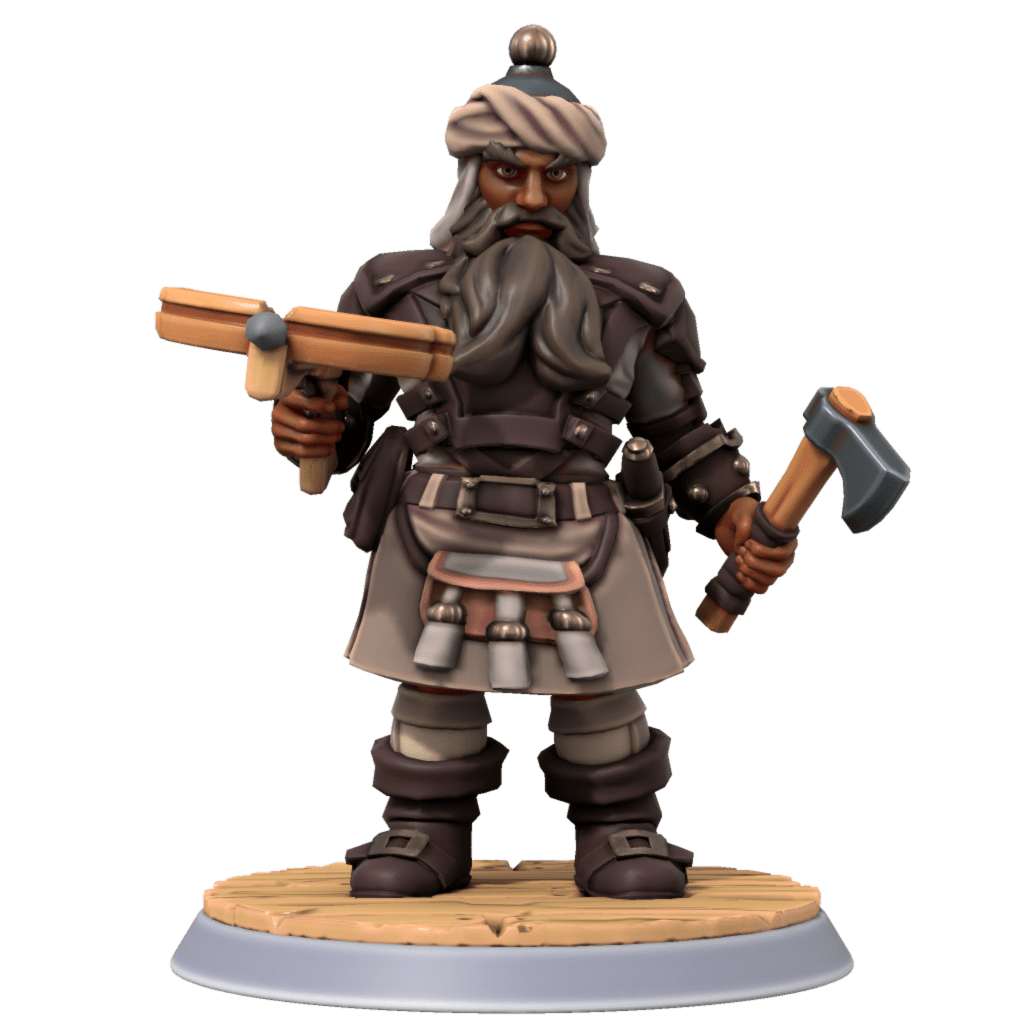
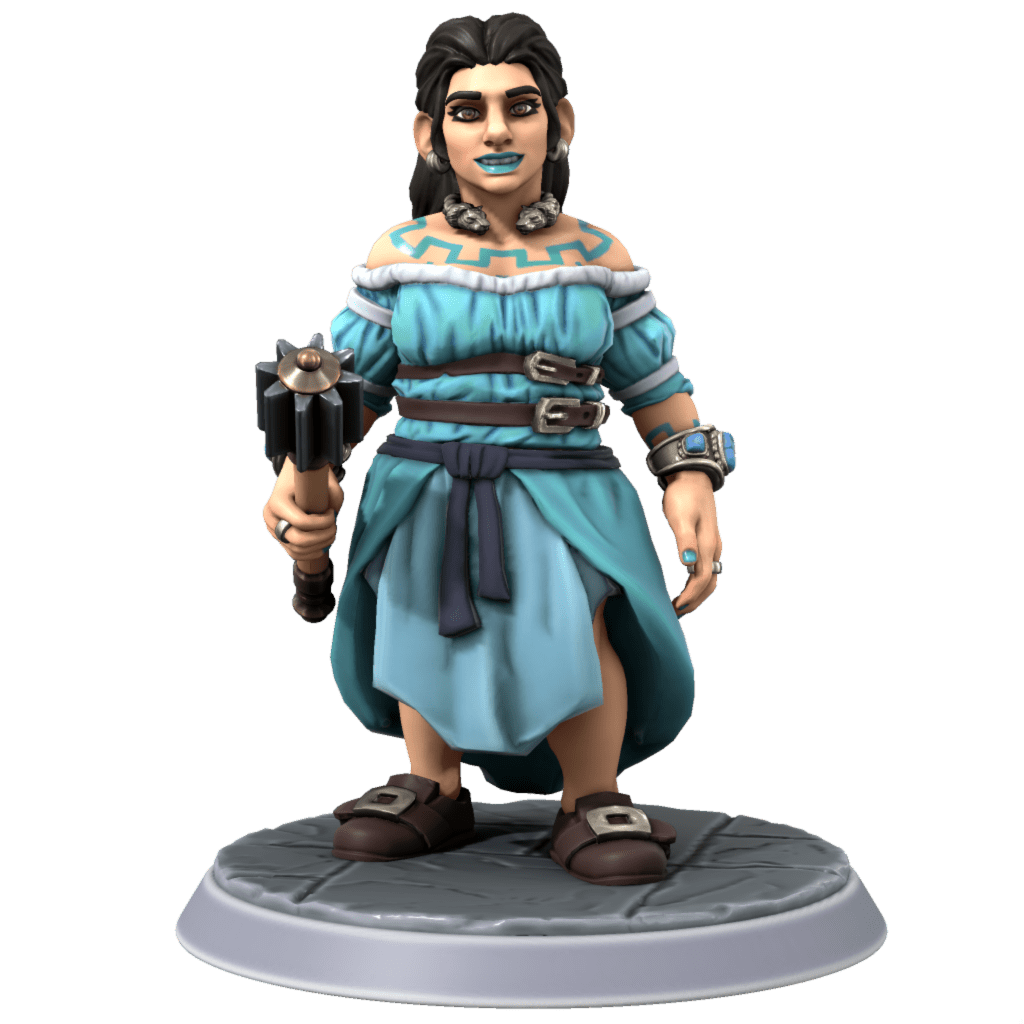
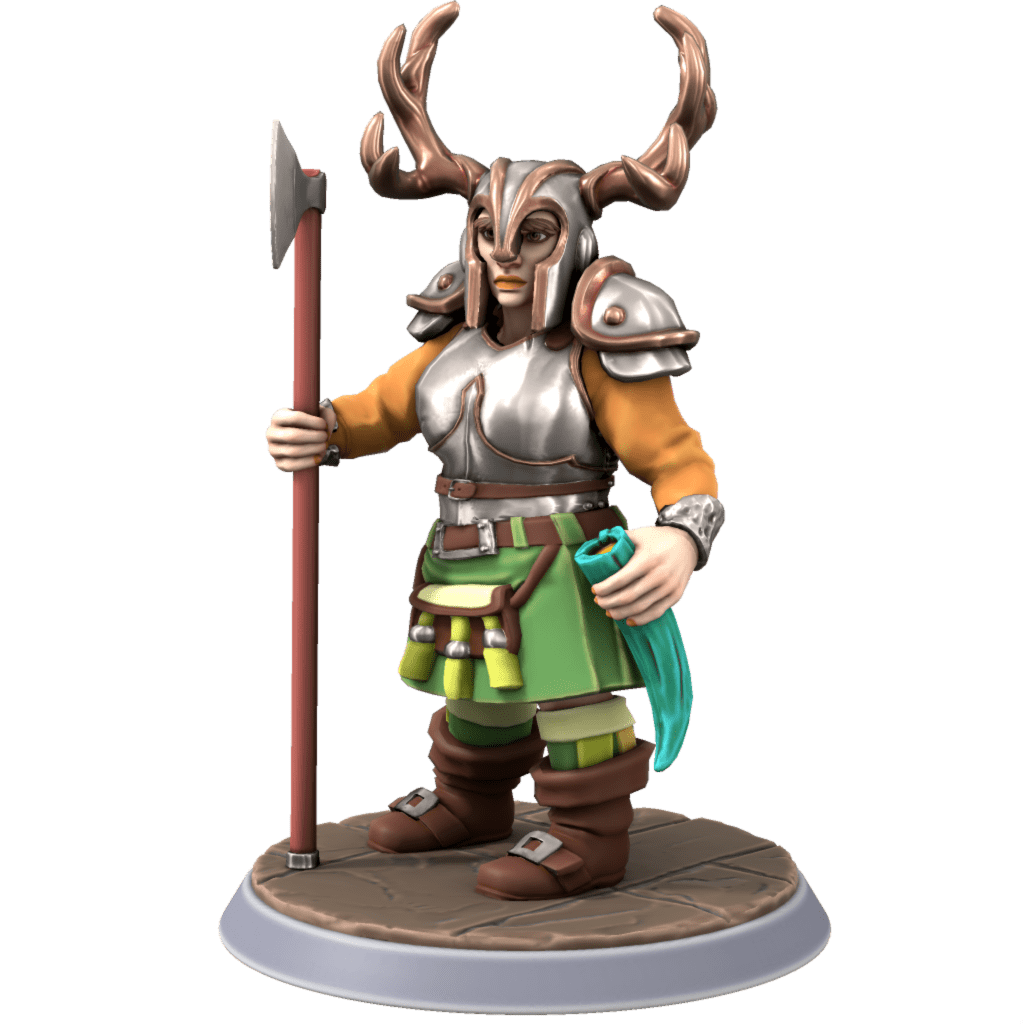
Regardless, many folk often imagine dwarves as many of them appear in their traditional garb: a kilt with a a matching sporran, secured with a sturdy belt with a tough buckle; a pair of durable shoes or boots, also bearing a substantial buckle; a simple tunic well suited for crafting or labor, as well as for fighting; the presence of a small light sidearm, such as a knife, dagger, handaxe, or hammer, which may also double as a tool; and either a head covering such as a hat, headwrap, or scarf, or an open-faced helmet as headwear. Masculine dwarves rarely do not have beards, though it is usually the clan dwarves who would most likely have long and braided or stylized beards and hair. Feminine dwarves rarely have facial hair substantial enough to be beards, though most prefer to be smooth-skinned on their face (due to the influence of multiple non-dwarf cultures).
Other than basic biological differences, the dwarves do not have strict, delineated gender roles in their society. In their minds, all dwarves can work, craft, and fight, and it is a family that rears and apprentices their offspring, and not just the mothers. On the average, dwarves tend to view or consider things from a communal perspective instead of just an individual one. This behavior tends to manifest in lone dwarves considering and adopting friends, companions, and associates into one community of their own consideration, and valuing those relationships just as much as they value those with a clan, family, or community.
For dwarves, magic is regarded as a craft like any other. Some members of their community may strive to refine and master their magic craft, just as others would strive to improve the crafts of their professions or interests. And, in some instances, those dilute and ancient connections between dwarves and their distant forebears, the giants, grants a few dwarves a spark of magic within them. Many dwarves prefer to pursue their talents in magic through practices such as arcane artifice, rather than bardic performance, wizardly study, or a warlock’s pact (though dwarf sorcerers are as common as human sorcerers). For those who follow a spiritual path for their magic, many dwarves prefer the mixed focus of divine or primal power and martial skill typical for a paladin or ranger, while the extremely devout are the only ones to fully commit to a priestly life as a cleric or druid.
While elves and gnomes are known for significant achievements, quite a few of those endeavors would not have been without the discovery and refinement of ores discovered and mined by dwarf communities. Dwarves were the first to discover such precious metals such as gold, silver, and copper, as well as the rarer palladium, platinum, aluminum, and mythryl. They also discovered several varieties of gemstones, including quartzes, beryls, corundums, diamonds, and the harvest of them all: adamants. It was also the dwarves who first made bronze and crucible steel, as well as developing the arduous and labor-intensive process of infusing both bronze and steel alloys with mythryl and adamant dust to make the alloys orichalcum and adamantine.
Though many do not necessarily think of it, the dwarves have made significant contributions to food and cuisine. Due to their penchant for subterranean communities, fungi and root vegetables are their most common crops, while snails, insects, and arachnids are frequently cultivated for food or as bait for catching cavefish. Groups of surface-dwelling dwarves often farm many other crops for consumption, especially grains for bread and beer, as well as raise livestock for meat consumption. Due to their preferred environments, most dwarves rear herd animals such as yak, alpaca, pacas, sheep, and goats, and on occasion pigeons. It has been only during recent times that dwarves began raising other livestock such as quail, chickens, and cattle.
However, dwarves do not strictly raise animals just for use as livestock; they are fond of having pets as well. Some alpacas and sheep are raised only for fiber, but are treated as pets otherwise, while messenger pigeons often are treated well. Many dwarves prefer weasels, degus, and chinchillas, while others may have eagles that naturally nest in the mountains, or big cats like cougars and snow leopards that stalk the mountain ranges. A few dwarves have bats, snails, or spiders as pets.
The dwarves of Iorth are some of the first peoples of the world, said to have been made in the image of their giant forebears by the great overgod Os. Old religious beliefs of the dwarves focus on the reverence of a few demigods said to serve as protectors and champions to the dwarves, but with the rise of the philosophical religions, these practices fell by the wayside. Dwarves are not unified in their spiritual beliefs, since each individual follows what worldview and faith that they prefer. However, regardless of faith, dwarves are fiercely communal, and this sense of community is never threatened or undermined by any differences of opinion regarding faith and spirituality.
Dwarves and their communities are one of the oldest and most stable presences in the whole of Iorth. Their survival and success was due to unity and community, and their failures and downfalls often occurred due to dissent and rivalry. Though not as awe-inspiring as they once were in millennia past, the dwarven civilization is still a wonder to behold.
Gallery



 Iorthbound