Tag: Dungeons and Dragons

Keeping Current

This post is the first in a while, but it is intended to be considerate of the changes that affect Dungeons & Dragons in its latest revision. The core game itself focuses on streamlining, improvement, and some restructuring to keep things current and uniform across the board. However, as one may intuit, these changes can prove to be a bit disruptive for players of the prior version whose games are steeped in older rulesets. As such, I felt that I should address how the game revisions for the 50th anniversary version of the game would impact a homebrew setting such as Iorth.

First and foremost, the design of Iorth was meant to help minimize the impacts of different game systems, editions, or the like on the game setting. I did not want to have large disruptive in-game events present to explain the severe changes in How Things Work in the campaign, especially as experienced by the Forgotten Realms (ala 2nd ed., 4th ed., etc.) and Dragonlance (SAGA system) settings in prior years. Firsthand memories of such seismic shifts did guide my homebrew design process, as noted:

  • The organization of the religions of Iorth, focused on a philosophy instead of a specific entity, were meant to enable valid character builds and choices regardless of edition. For example, the current revision does not cover the Tempest domain, which would be a prime choice for a cleric of Thor, for example. I would not care for a player to feel like they have to somehow use or convert older material to remake their main concept in a revised ruleset. As it is, divine and primal characters simply select one of the 4 major religions, have a generally appropriate alignment for said religion (non-Evil for Path of Light; Neutral-based for Path of Awareness; any for Path of Nature; or any Evil for Path of Darkness), and go from there. It makes things so much easier to use across editions and rulesets than a homebrew that hews close to a specific edition of a specific ruleset.
  • The major peoples of Iorth are more or less grouped into a primary category (humans, elves, gnomes, dwarves, etc.), rather than necessarily going down the rabbit hole of very specific subtypes. Once again, this stems from rule changes over the years, though also adapting the homebrew from one ruleset to another also introduces issues. The last thing I want to have anyone do is figure out how to stat up or have available something like psychic deep snow gnomes in a game system that wouldn’t accommodate them well or at all, and make it a mandatory thing by having said gnome variants be a keystone part of the setting and game system.
  • Magic systems often get big changes in game system or editions. As somewhat noted when mentioning religions earlier, having a larger system that can accommodate multiple versions or interpretations of How Things Work is intentional. Other than the major distinctions between arcane, divine, and primal magics, there’s no real specification about those major categories in the setting, generally. This is to make it easy to include or remove systems in the setting based on the game system used.
  • Having specific levels of magical and technological ability available is also meant to set the tone of the setting. For example, other than a personal preference not to have firearms in my campaign setting, the general logistical challenges and dangers that firearms pose in a world that has much more readily available access to volatile elements such as magical fire makes that technology more of a liability instead of an asset. Whereas in the real world, armies generally don’t have to worry about regularly experiencing events that may ignite or detonate large amounts of gunpowder or explosives in an instant, a fantasy world like Iorth does with its fire-magic using inhabitants and creatures. (As it is, having a firearm in the Elemental Plane of Fire seems doomed to a particular fate.) I’ve softened to a degree where such things can exist for one reason or another, but the benefits they provide in the real world are curbed by the imaginary world’s unique or novel possibilities.

I’ve been creating homebrew settings since the rise of 2nd ed. AD&D decades ago. I’ve reinvented the wheel more times than I’d like to admit, much less remember. As such, when my homebrew ideas finally started to shift into the form they have now, the 3.5 edition of the game was around, and its relative glut of character options was proving cumbersome on top of a system where the math could easily get out of hand. I wanted to have a creation that I was invested in, and that granted me the authorial license that playing in someone else’s sandbox (like Greyhawk, Forgotten Realms, Dragonlance, etc.) didn’t grant me.

(To be fair, I still enjoy games set in others’ sandboxes, ala Star Wars and Marvel. However, it is the specific qualities of those settings that appeal to me, and there is more than enough wiggle room in both for me to create something without it either clashing against the underlying core structures of the setting, much less feel constrained by lore or by player knowledge and expectation of lore. For a lot of fantasy settings, I cannot say the same.)

The phenomena I am trying to avoid has been well documented in recent years. The best examples I can think of in recent years are looking at the development of Critical Role and its setting over the years, along with reviewing the start of Acquisitions, Inc. in comparison to its last/latest manifestations. With Critical Role, it was the jump from two similar yet different systems, while edition and setting changes are what impacted Acquisitions, Inc. I still recall the big shifts in the game, and how it was implemented in the settings with the edition changes of D&D. I also remember the excessive accumulation of in-setting lore and in-game systems that made running such stuff a mess, as well as managing player knowledge and game lore a bit of a nightmare.

I have updated a few posts with some changes to reflect the content of the 2024 edition of D&D. However, my genuine goal is that this setting is malleable enough to use with many systems, and not just D&D. While I still enjoy the game, I know those who prefer something else, or who have opted to embrace an older version or alternative interpretation of the system or its settings.

In addition, I would like for Iorth to be available to players of other systems, and not just other editions of D&D. Hopefully someone who prefers Pathfinder could use this material just as much as someone who uses Castles & Crusades or Old School Essentials. I’d like the core ideas and elements to be relatively system-free, while retaining some elements that are iconic to fantasy in general because of D&D and all of the material which inspired it.
Early Iorth, ala Old School Essentials

The world of Iorth is an evolving place, changing and developing over time like any other world. However, the most notable changes to the realm are due to epic adventures and grand schemes, which have shaken the foundations of the world to its core time and again.

In an obvious sense, these changes reflect the rule changes of the role-playing game system transitioning from edition to edition, or even from game system to game system. While each group may wish to use whichever game system and edition thereof per their preference, this blog generally focuses on using Dungeons & Dragons or one of its multiple iterations, variants, and the like. In any event, a basic rule of thumb is the game should fit the setting, and should not have the setting forced to fit the game.

While this seems obvious, it is important to clarify this concept. For example, a cleric of Pelor, paladin of Tyr, or devotee of Paladine each could easily be modified into simply being different sorts of faithful members of the Path of Light. However, it is much more difficult (and constraining) to insist or incorporate the churches of Pelor, Tyr, and Paladine into the world of Iorth, because the driving element behind divine magic and faith in Iorth is devotion to a wide-reaching philosophy rather than to the creeds of a specific deity.

This becomes more obvious when trying to constrain or force the setting to accommodate elements from settings which are not supported. The Mages of High Sorcery from Dragonlance wouldn’t fit in Iorth anymore that the dragonmarked houses of Eberron, the magical Weave of Forgotten Realms, or the organizations of Critical Role. If a character’s concept are so strongly tied to an element present in another campaign setting, then that character concept is best reserved for said campaign setting.

The current Common Age of 1375 is well represented by the latest (2024) iteration of the Dungeons & Dragons rules (though admittedly, firearms are not a normal part of the setting, and should be excessively rare). However, for the earlier years of Iorth, especially around the notable era of the Common Age of 1000, using the rules of an earlier edition or a retroclone is especially fitting. Though the premiere of the hero Tiram Voland is depicted in terms fitting for the original version of the game, it is not necessary to exactly use those rules to replicate such an early era.

While there are plenty of choices for retroclones to replicate that time, a ruleset that is optimal for such early years is the Old School Essentials Basic or Advanced rules. For my games, I use the Advanced rules, and I use the following optional rules:

  • Ascending Armor Class
  • Rerolling 1s and 2s for hit point rolls during character creation
  • Variable wind conditions
  • Variable weapon damage
  • Invulnerability and damage for monsters by monsters
  • Subduing foes
  • Morale
  • Arcane spell casters and staves
  • Separate race and class
  • Multiple classes
  • Secondary skills
  • Lifting demihuman class and level restrictions
  • Human racial abilities
  • Advanced spell book rules
  • Attacking with two weapons
  • Charging into melee
  • Parrying
  • Splash weapons
  • Additional weapons and armor from Carcass Crawler issue #3. (Gunpowder and energy weapons, as detailed in the previous two issues, should be unique items encountered sparingly.)

Other optional rules which may be used within the spirit of the game include:

  • Encumbrance (basic or detailed)
  • Reload feature for crossbows
  • Individual initiative
  • Weapon proficiency
  • Restricted weapons
  • Weapon specialization
  • Limits on turning the undead
  • Limits on returning from death
  • Missile attacks on targets in melee

Allowing high-level play for human characters only (up to 36th level) isn’t an option since it enforces a huge power disparity between human and demihuman characters that just doesn’t exist in Iorth. In addition, a majority of demihuman non-player characters may follow class restrictions, with the very rare exception, whereas player characters should be allowed to have characters who are unique compared to others of their culture (which opens the door for interesting interactions). As such, any character reaching 14th level is a significant achievement in these times.

The class options available for an Iorth campaign are generous, but not unlimited. Below are the class and race character options available. If a group wishes to use demihuman classes instead, those options will be listed in a separate section accordingly. Please note that the term “Race” used in OSE is merely echoing the terminology used in that game and the earlier editions it replicates; using “Species” instead may be preferable for some. However, the focus of the game is to facilitate gameplay in the style and flavor of those earlier versions of the game.

Class Options:

  • Fighter
  • Cleric
  • Magic-User
  • Thief
  • Acrobat
  • Assassin
  • Barbarian
  • Bard
  • Druid
  • Illusionist
  • Knight
  • Necromancer
  • Paladin
  • Ranger
  • Kineticist
  • Beast Master

Race Options:

  • Human (with racial abilities option)
  • Dwarf
  • Elf
  • Halfling
  • Drow: Also known as Cave Elves, this group of elves are not the malign version often thought of in most fantasy settings.
  • Gnome
  • Half-Elf
  • Half-Orc
  • Gargantua: Also known as Goliaths or Giantkin, these beings are humans with traces of giant heritage.
  • Goblin
  • Wood Elf: This group of elves is the most encountered variety throughout most of Iorth.
  • Dragonborn: A variety of lizardfolk with dragon heritage hailing from the southern hemisphere.
  • Tiefling: A variety of human with fiendish heritage. A majority tend to have small horns on their temples/forehead and red-tinted skin, but other varieties may be encountered.
Demihuman Class Options:
  • Dwarf
  • Elf
  • Halfling
  • Gnome
  • Half-Elf
  • Half-Orc
  • Gargantua
  • Goblin
  • Wood Elf
  • Dragonborn
  • Tiefling
Rare Options:
  • Aasimar: Humans with traces of celestial heritage, this option isn’t currently available in OSE, but there are options out there. One option that could be used is featured in this Class Catalog for various OSR systems available at DriveThruRPG.com.
  • Monk/Mystic: This option isn’t currently available in OSE, but there are options out there. One recommended version is provided in Scout Magazine, Vol. II., available at DriveThruRPG.com.
  • Duergar: All duergar are members of the Leadfist clan of dwarves who were transformed and twisted due to weird magics and prolonged lead exposure, and thus tend to be hostile and xenophobic. Such characters should be extremely rare if permitted, and would face several obstacles outside of their hidden enclaves.
  • Svirfneblin: Valuing secrecy for protection, this variety of gnome is highly unlikely to encounter outside the depths of the Nether Lands. These characters should be extremely rare if permitted.
  • Mage: These characters should be rare if permitted.
  • Acolyte: These characters should be rare if permitted.
  • Mutoid: Many of these beings are not encountered outside of the reaches of a dungeon. These characters should be extremely rare if permitted.
  • Mycelian: These fungal beings are so reluctant to leave their homes in the depths of the Nether Lands; consequently, they are extremely rare to encounter.

Setting Consistency:

There are some notable elements used in OSE that may not mesh with current versions of D&D. However, these issues are easily resolved with the following rules of thumb.

  • Alignment: Unlike the current edition of D&D which uses 9 alignments from the good-evil and law-chaos axes, OSE has the original 3 of Lawful, Neutral, & Chaotic. In most instances, please consider Lawful to be analogous to Good (with Lawful Good at its purest expression), and Chaotic analogous to Evil (with Chaotic Evil as its purest expression). Some forms of Chaotic Good, Lawful Neutral, Chaotic Neutral, and potentially even some forms of Lawful Evil, may be treated as versions of the Neutral alignment alongside true Neutral. However, characters that are predominately Good should be considered Lawful, while characters that are predominately Evil should be considered Chaotic.
  • Alignment Languages: The OSE continues the use of alignment languages, as they appeared in old versions of D&D. However, though that concept no longer is in use in D&D, these languages can be said to be alternate terms for existing languages.
    • The Lawful alignment language can be regarded as being the same as Celestial.
    • The Neutral alignment language can be regarded as being the same as Primordial.
    • The Chaotic alignment language can be regarded as being the same as Infernal (and by extension, Abyssal).
  • Classes: In many instances, quite a few OSE classes may be “mapped” over to their equivalent in 5th edition. However, the same is not as easy for having OSE versions of some 5e classes. For rough approximations, please refer to the table listed below.
OSE ClassD&D Equivalent
FighterFighter
ClericCleric
Magic-UserWizard
ThiefRogue (Thief subclass)
AcrobatRogue or Monk
AssassinRogue (Assassin subclass)
BarbarianBarbarian
BardBard
DruidDruid
IllusionistWizard (Illusionist subclass)
KnightFighter (Cavalier subclass)
NecromancerWizard (Necromancer subclass)
PaladinPaladin
RangerRanger
KineticistMonk or Sorcerer
Beast MasterRanger (Beast Master subclass)
Mystic/MonkMonk
Mage or Magic-User/Illusionist/NecromancerSorcerer or Warlock
Acolyte or Magic-UserArtificer

Adaptations: Lands Beyond the Heartlands

The Heartlands of Iorth are the most populous region of the world, though they are not the only populated region of the world. The various human-dominated realms in the northern hemisphere of the planet are numerous yet scattered throughout the region. They tend to develop somewhat independently of one another, and while one region may prosper, another could be facing dire hardships. However, in any event, these regions are left relatively undefined for others to develop and define for their own stories and campaigns.

One resource available that could be easily used for these realms is Journeys through the Radiant Citadel, for Dungeons & Dragons 5th edition. Each of the adventures contained therein provides details to new settings which could be easily integrated into Iorth, if one wished. This post will review some of these settings and provide information on how they could be used. These items will be organized by the particular region of Iorth where they are most likely to be found.

The Estlands

The region known as the Estlands consists of several small continents and large archipelagos scattered along the reaches of the vast High Sea. This region is also known as the Feudlands due to the conflicts and ever-changing allegiances that arise between the various settlements and nations which exist here. Notably, the predominant nation is the Empire of Xo, which consists of several islands under the official rule of the Emperor of Xo, but actually under the rule of several local leaders vying for power and control, as well as the respect of the emperor. In essence, these regions are part of a larger confederacy that, for the sake of appearances, presents itself as a unified empire.

The major challenges to the Empire of Xo are the orc nation of Grok and the goblinoid nation of Yob. Both vye for territory with the empire, and struggle for power and influence.

Dayawlongon

(in “Between Tangled Roots”)

At the southernmost reaches of the Estlands lies the archipelago of Dayawlongon. Said to overlook the seas of the southern hemisphere, and thus thought to be the ones who would ever first behold a dragon from the south heads towards the north. However, its location actually makes it he most likely to encounter travelers coming from the southern island nation of Koatlan; in many cases, refugees from the tyrannical theocracy migrated to the archipelago, seeking safety. Many drakelings from the Wyrmleague also migrated and settled in Dayawlongon as well.

Siabsungkoh

(in “Salted Legacy”)

The valley of Siabsungkoh lies on the eastern coast of the southernmost reaches of the lands of Great Xing. In several instances, many trade goods from across the Estlands, as well as goods from the other major regions, have all passed through Siabsungkoh at one point or another. Due to its location, it is a place of intrigue regarding the courts of the Empire of Xo and Great Xing.

Umizu

The city-state of Umizu is a fine example of a small island settlement that has sought independence from the Empire of Xo. Its matrilineal culture also clashes with the patriarchal culture of the Empire of Xo. However, Umizu is deemed an important regional stronghold, and the desire to keep Umizu under control of the imperial court is intense.

Great Xing

(in “Buried Dynasty”)

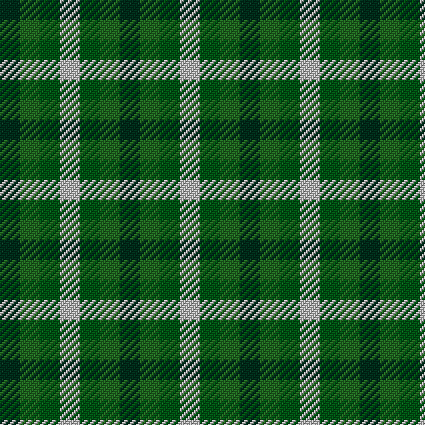
The dwarven-ruled nation of Great Xing derived from the unification of human and dwarven communities after the fall of the Great Empire. The lineage of the Jade Emperor of Great Xing comes from the marriage of a human princess to a dwarven noble, who was the last of the lost Jadeshaper (clan tartan shown at right) clan of Great Underground Empire of Dwyrheim. The current Jade Emperor has scant traces of human heritage in comparison.

Though not openly hostile to the Empire of Xo, Great Xing often has “differences of opinion” with the ruling imperial court. It is granted some degree of autonomy, but it avoids setting off a civil war by demanding independence or self-sovereignty.

The Sudlands

The region known as the Sudlands is home to many nations, though the most prominent of them are the Khanate of Qudesh, the Kingdom of Nye, with the fiercely independent city-state of Sarhaȸandar resting between them. With roving tribes of humans, giants, lizardfolk, and even gnolls, the region in one rife with conflict and opportunity.

Sensa Empire

(in “Gold for Fools and Princes”)

West of the Khanate of Qudesh lies the Sensa Empire, known for its wealth of gold. Normally peaceful, the region is in the midst of a difficult power transition, which the spies of Qudesh have certainly noticed. The Sensa Empire is considered to be a part of the larger Kingdom of Nye politically, though it officially regards itself as independent.

Shankhabhumi

(in “In the Mists of Manivarsha”)

The realm of Shankhabhumi is one of the more notable, yet peaceful, regions within the Khanate of Qudesh. Its natural defenses protect it from most incursions by hostile neighbors, but the locals are always watching the balance of power in the region.

Tayyib Empire

The Tayyib Empire, based in the region of Suristhanam, borders the Khanate of Qudesh to the west and the Kingdom of Nye to the north. Its recent upheaval regarding succession has made the nation aggressive in achieving security and prosperity. This, under the actions of some of the less scrupulous nobility and officials, has turned into covert or not-so-covert attempts to acquire land and resources from its neighbors. Furthermore, the infiltration of their community by serpentkin from Koatlan makes matters worse, for these agents seek to cause instability and disruption until they or their lackeys may obtain power over the empire.

The Veslands

The region of the Veslands is dominated by the conflict between the Theocracy of Totlan with its neighbors, the Kingdom of Aki and the Kingdom of Suyu, as well as with the various roving tribes of the region.

San Citlán

(in “The Fiend of Hollow Mine”)

San Citlán is one of the few independent settled regions within the northern Kingdom of Aki. Its value as a trading partner, and its mineral wealth, make it a sought-after destination by many within and beyond the region. It has cultural links with Tletepec, and considers itself part of the same sphere of influence as that region, though many from Tletepec feel that San Citlán is far too “polluted” with outside influences.

Tletepec

(in “Trail of Destruction”)

South and east of San Citlán is the region of Tletepec, which is part of the greater Kingdom of Aki. This region faces pressure from the Theocracy of Totlan to merge its territory with theirs. However, the people of Tletepec value their spiritual independence, which the Kingdom of Aki respects, and do not care to be under the rule of what consists of a cult of personality in their minds. The coastal regions are occasionally threatened by pirate raids or attacks from bands of ravaging merrow.

Atagua

(in “Orchids of the Invisible Mountain”)

The region of Atagua is a part of the greater Kingdom of Suyu, yet the Theocracy of Totlan is actively seeking to spread its influence throughout the region. The region is also close to natural access points to the Shimmer and the Shadow, allowing for travel between the Prime Material Plane and the two reflective planes.

Peoples of Iorth: Dwarves

Dwarves are one of the first groups of beings to occupy Iorth since prehistory. Distantly related to the giants and their titan forebears, dwarves are hirsute, stout, sturdy folk who are between 4’ and 5’ in height. Dwarves have a broad range of traits akin to humans. Many dwell in massive subterranean communities known as dwelves.

Despite having multiple communities and clans spread throughout Iorth, all dwarves speak the same language: Dwarvish. In many instances, particular dialects of Dwarvish indicate which community a dwarf may come from, but the differences are minor enough to ignore overall. Dwarvish descended from the language of the giants, and it uses the same rune-like alphabet used by giants, though lacking all of the diacritic marks used in the written script. The alphabet is a direct, phonetic alphabet, possessing no multigraphs. The language itself is very formal and precise, having no homonyms, irregular verbs, or other features that may create confusion for a speaker or reader of Dwarvish.

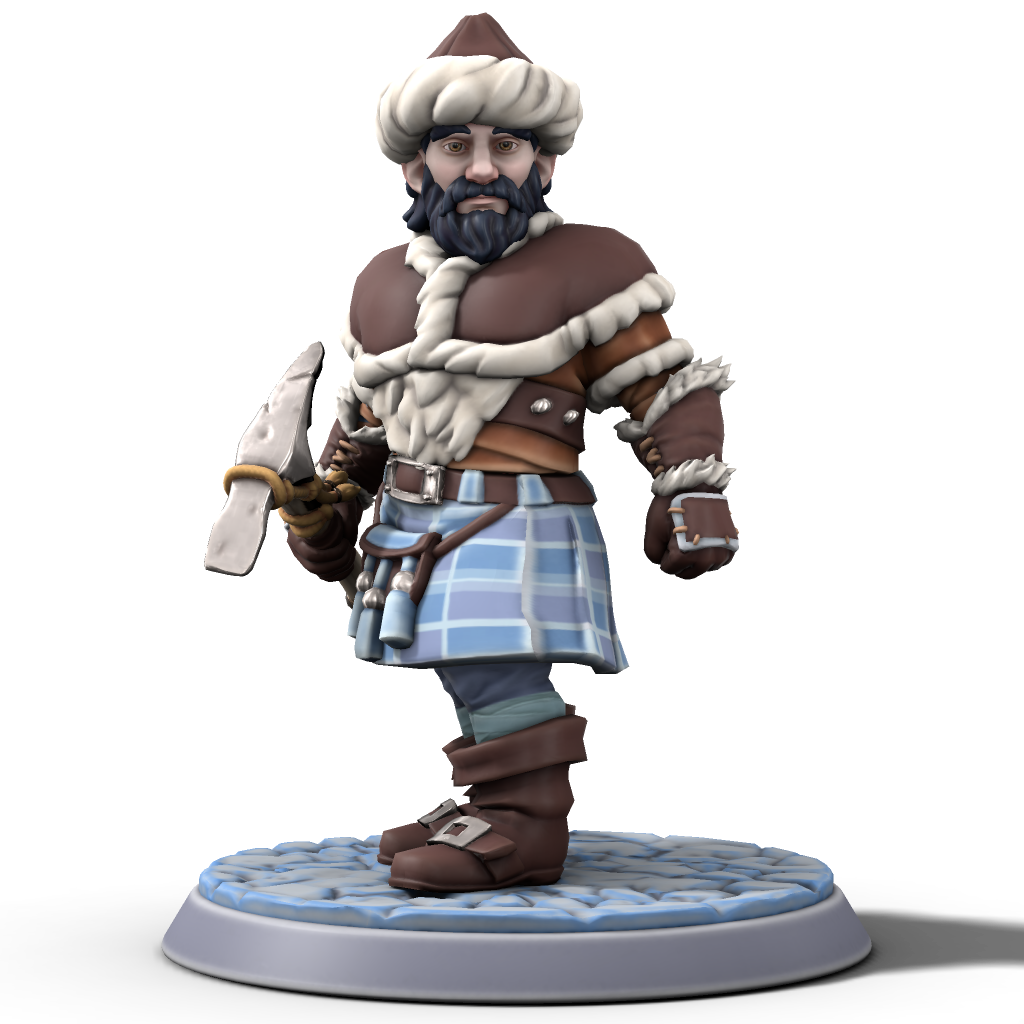
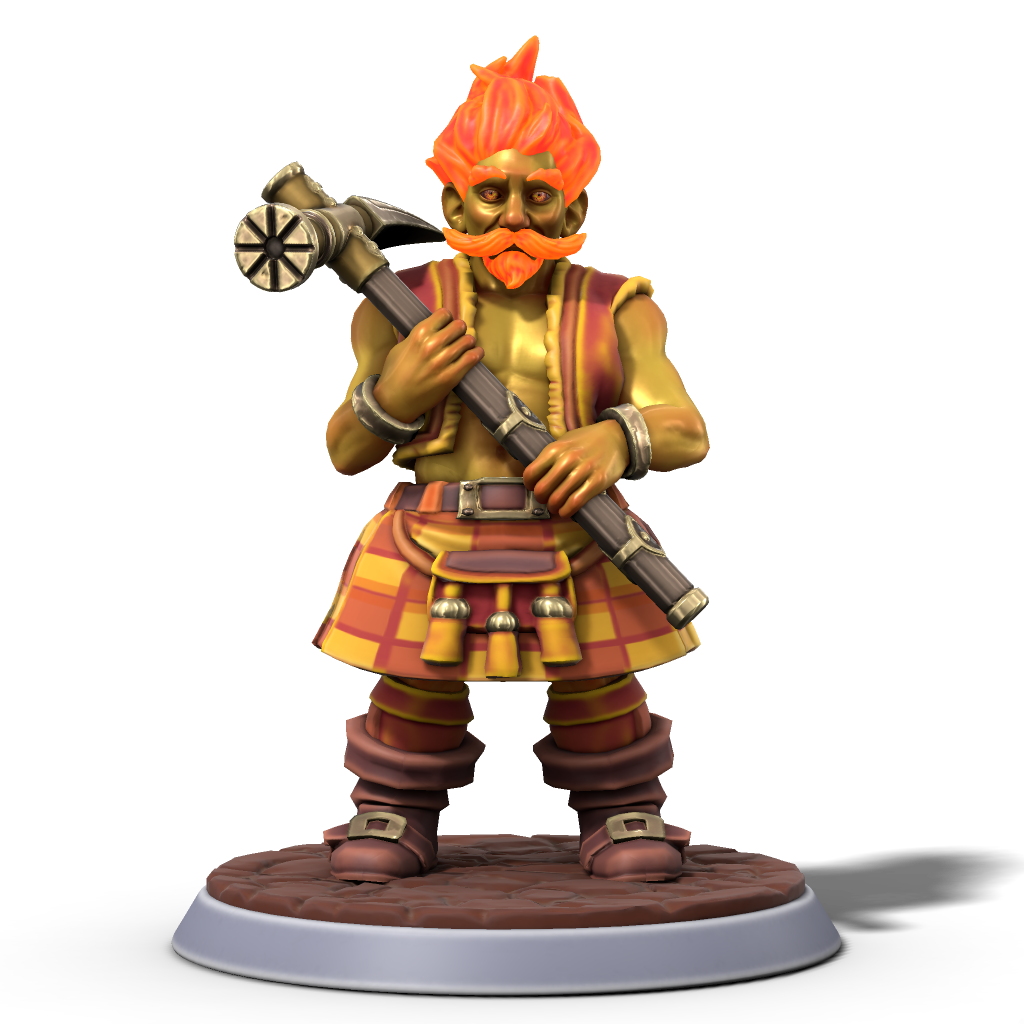
While the majority of dwarves are of a mixed heritage, there are a few communities that have maintained their clan structure and heritage. Clan dwarves tend to have particular traits notable for members of those families. However, the requirements and restrictions for a group of dwarves to be considered a clan are exceedingly stringent. The hallmark of a clan dwarf’s appearance, other than having one or more of the characteristic physical traits of the clan, is the unique kilt that only dwarves of that clan wear. It is seen as a severe affront to the clan and to dwarves in general if a non-member of the clan is seen wearing a clan kilt. Friends or allies of a dwarf clan may wear another item that incorporates the clan’s tartan within it, such as a cloak with a tartan lining or a sash, but the clan kilt is reserved strictly for dwarf members of the clan only.

These severe strictures for dwarf communities to be deemed part of a clan has meant that many dwarven clans have failed to still meet the requirements and restrictions expected for a clan, and thus have become a “lost” clan. Sadly, the amount of lost clans far exceeds the number of existing clans in Iorth. As such, only three clans of established and continued heritage still exist in Iorth: the ruling Forgecrown clan, and the noble Bloodaxe and Bluestone clans.

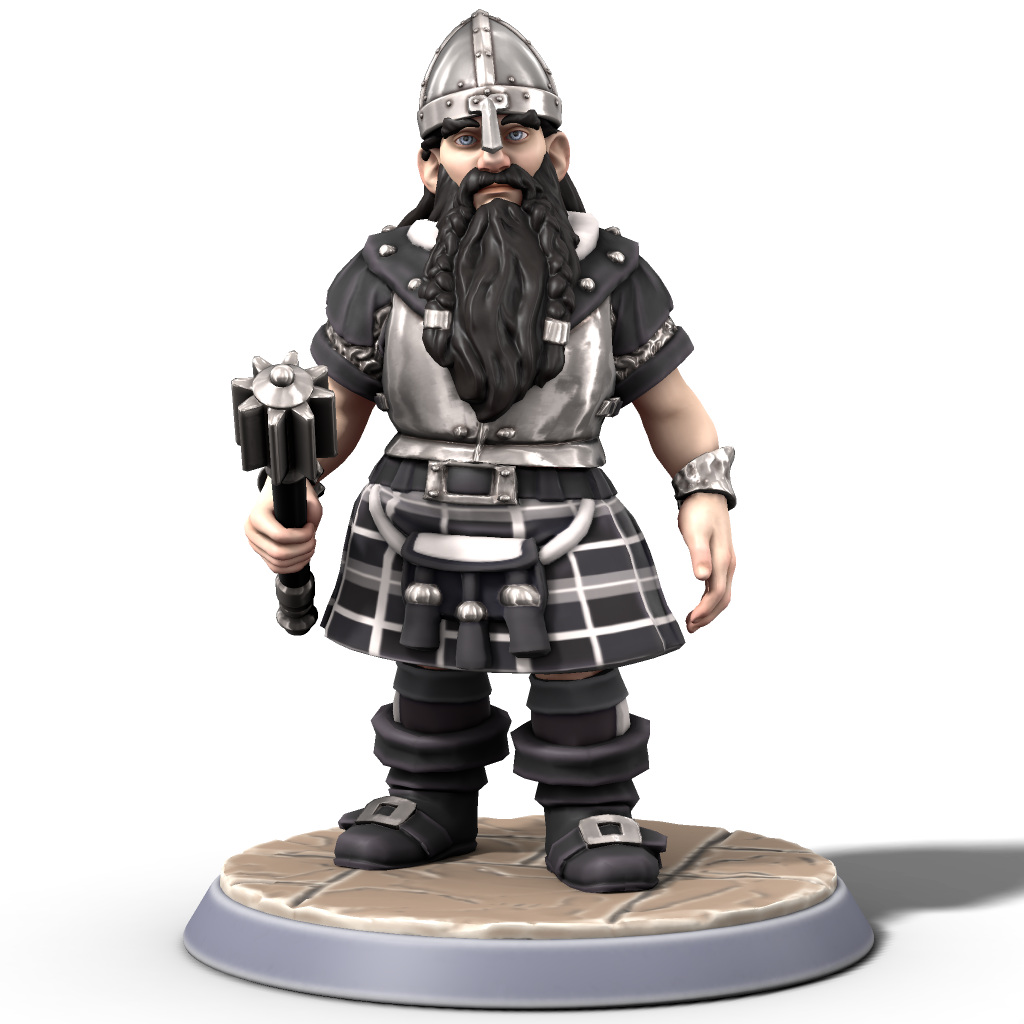
The dwarves of the Forgecrown clan typically have light complexions, with jet black hair and gray eyes. They wear a kilt with a simple black and white tartan. The clan prefers to use black-and-white onyx gemstones in their jewelry. Since this clan is the ruling clan of the Great Underground Jarldom of Dwyrheim, the colors black and white by themselves are often considered to be reserved for use by the jarl’s clan and jarldom’s officials. Their home is also the capital of Dwyrheim: Bergburg.

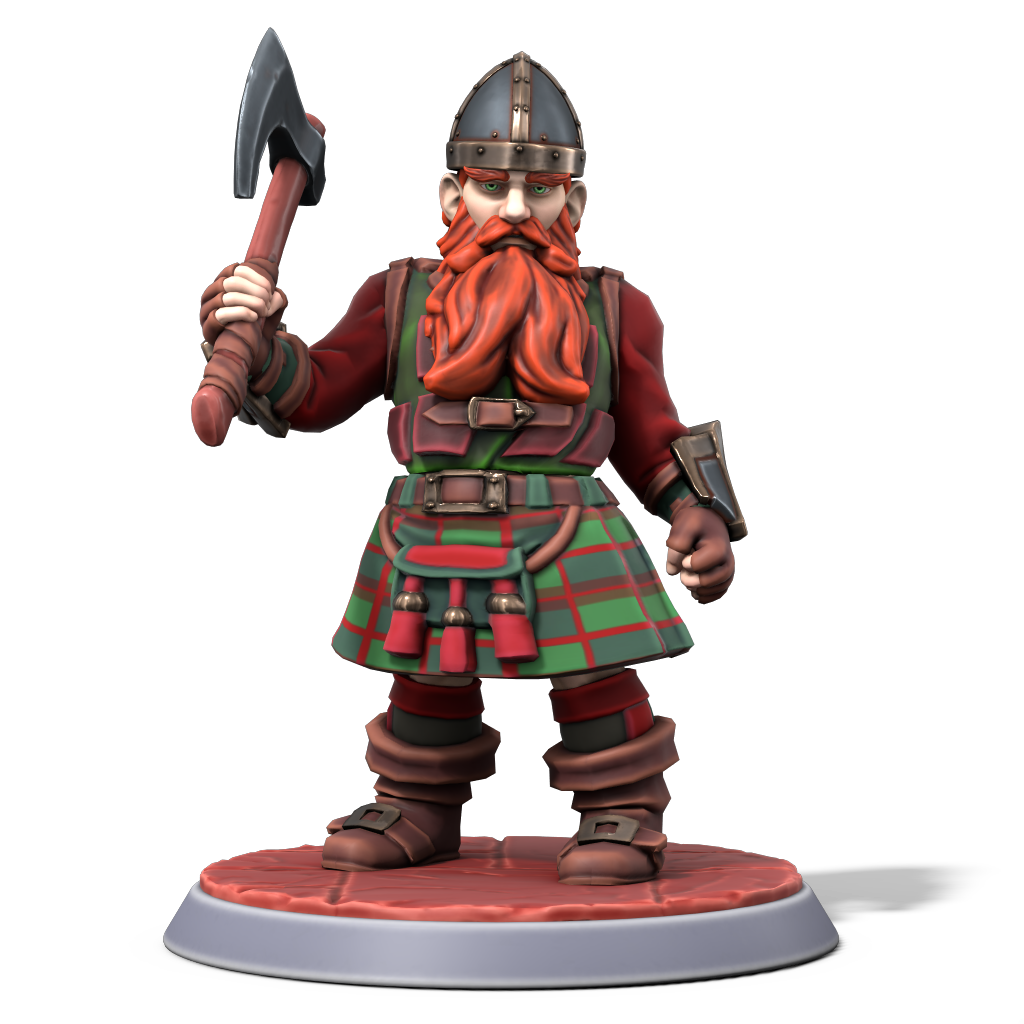
The dwarves of the Bloodaxe clan typically have ruddy complexions, with fiery red hair and bright green eyes. They wear a kilt with a simple red and green tartan. The clan prefers to use bloodstone gemstones in their jewelry, and many favor axes as a personal weapon. Based out of the dwelve of Bludburg, the Bloodaxe clan is renowned for being the fiercest warriors of Dwyrheim, and they are known to focus heavily on concepts of order, legality, tradition, and honor (to the degree of being a detriment, in some instances). These attitudes naturally lead the Bloodaxe clan to often clash with others, especially members of the Bluestone clan.

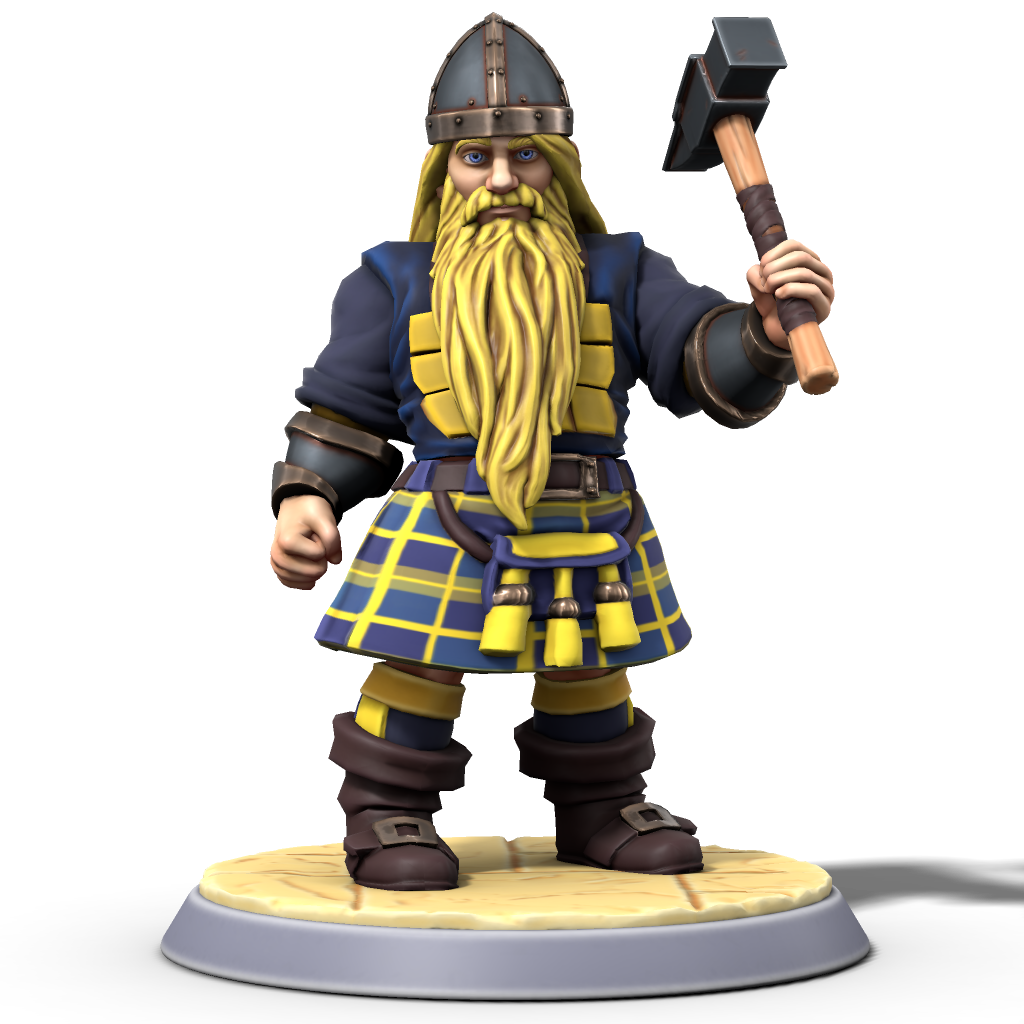
The dwarves of the Bluestone clan typically have tanned complexions, with vibrant blond hair and bright blue eyes. They wear a kilt with a simple blue and yellow tartan. The clan prefers the use of lapis lazuli gemstones in their jewelry, and many favor hammers as a personal weapon. Based out of the dwelve of Stanburg, the Bluestone clan are the best crafters and artisans of Dwyrheim, and are sought after for their superb goods. The Bluestone clan strongly believes in doing what’s right, honest, and good above all else, even if that may mean compromising or ignoring dwarven laws or traditions. As such, the Bluestone clan often finds itself at odds with the traditionalistic Bloodaxe clan.

Furthermore, the Bluestone clan is known for its compassion for taking in the surviving few members of the lost Coastrig clan, since the old, long-lost home of the Coastrig clan, Ridgeburg, has become the Free City of Rigby. Due to their proximity to the elven realm of Eldor, the dwarves of the Bluestone clan are known to be friends to fey and elves.

In contrast to the hereditary clans, there have been a few clans of dwarves created by decree of the Jarl as service clans. Services clans are dwarf clans whose founding members consist primarily of dwarves adopted into the clan instead of born into the clan. All of these dwarves were considered clanless until their adoption by the service clan. As such, these dwarves do not have particular lineages or traits typical of their line, and appear indistinguishable from any clanless dwarf, barring the clan kilt all tend to wear. There are two well-established service clans that are well-known throughout Iorth: the Warshield clan and the Wyrmwright clan.

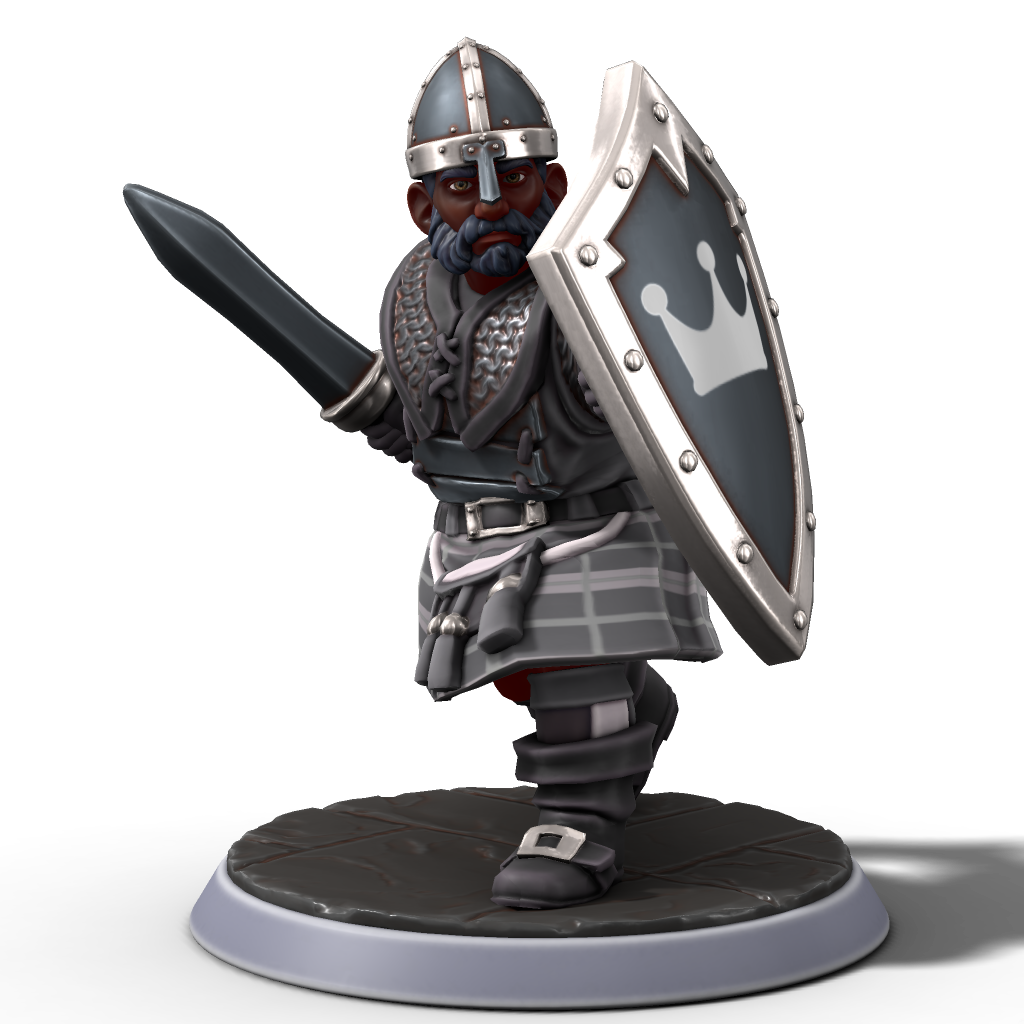
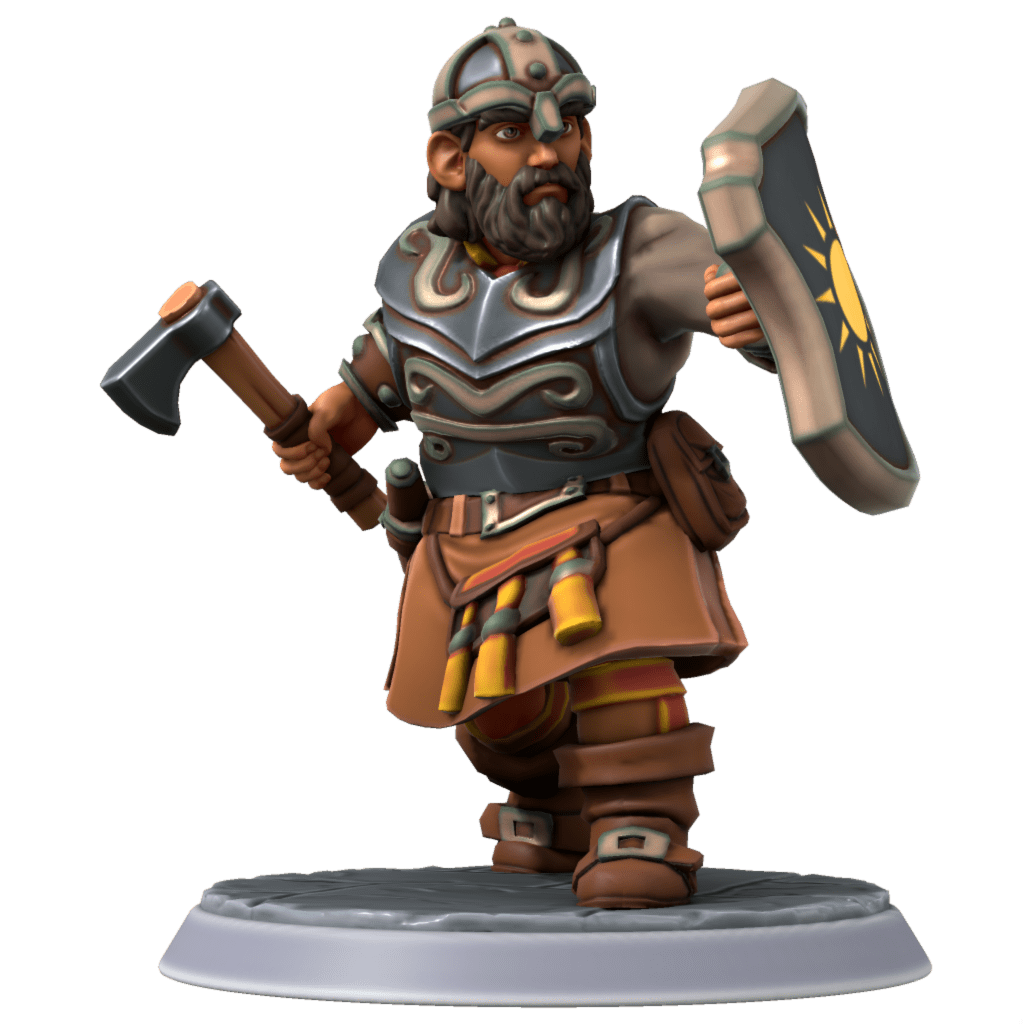
The Warshield clan is a service clan sworn to the Forgecrown clan. Their simple clan tartan of light grey and dark gray is meant to represent their seclusion from the politics and strife typical between clans, and instead symbolize their devotion as guardians and enforcers for the Forgecrown clan. The Warshield clan is affiliated strongly with the army of Dwyrheim, as well as security and operations in the grand dwelve and capital of the jarldom, Bergburg. Shields are commonly used by members of the clan, especially since they regard themselves as shields against harm and the ruling Forgecrown clan.

The Wyrmwright clan is a displaced clan that resides in the Farlands in the southern hemisphere of Iorth. These dwarves were settlers of southern lands who found themselves under the threat of attack and invasion by the powerful dragon-ruled nations of the Wyrmleague. In order to prevent tragedy, these dwarves made a pact with the dragon lairds of the Wyrmleague and the Jarl of Dwyrheim.

Though technically an independent clan, this clan crafts great, powerful, and beautiful treasures for dragon hoards, whether using new precious treasures, or reworking some small portion of the treasure of a dragon’s current hoard. The dragon lairds swore to place the clan under its protection, and swore not to cause the clan to be involved in the scheming or feuding of any dragons, whether themselves, any of their subjects, or any rogue outsiders. Furthermore, the Wyrmwright clan agreed to have some of its members serve as diplomats and merchants to travel to other realms in service to the Wyrmleague. To represent their service, the clan uses a complex tartan for their kilts, bearing the white, black, green, blue, red, and yellow colors of their dragon lairds artfully woven together.

The lost clans of dwarves do have some surviving members, but not enough for the clan to be considered intact. The dwelve of the Coastrig clan eventually became the metropolis now known as the Free City of Rigby. The dwelve of the Rockwall clan is the dwarf-led fortress of Wallburg in the Kingdom of Œland. The dwelve of the Burgmoors clan is now known as the dungeon called the Dankvault. And, the oldest settlement in all of Iorth, the ancient dwelve of the Scarbrow clan, gives its name to the fortified settlement of Skara Brae in the Kingdom of Wyland.

In the distant Farlands of the southern hemisphere, the dwelve of the Icebeard clan, Iceburg, serves as a fortified trade hub for all peoples. Though considered a “lost” clan, these dwarves do their utmost to preserve their heritagr and traditions, especially when compared to the perceived “submissiveness” of the Wyrmwright clan to the dragons. The Icebeard clan prize themselves as giant slayers, and many tales regail their triumph over their ancient frost giant overlords.

One ancient dwarf clan, the Brassneck clan, sought to embrace the primal elemental power of the fire giants who once ruled over them. As a result of their endeavor, they transformed into something new, and left Iorth to dwell in another dimension. Though their story and history is forgotten by most, the dwarves of the Brassneck clan, now called either forgesaints or azer, dwell on a fiery demiplane drifting through the Astral Plane.

Beyond the few surviving clans and the service clans, there is one clan of dwarves that are deemed dishonorable and malign: the Leadfist clan. This outcast clan of dwarves is known by its solid gray kilt lacking any visible pattern, as well as by their typical appearance: an unhealthy complexion, often turning gray or turned gray from generational habitual consumption of lead; a malnourished overall appearance; bloodshot gray eyes; ghostly thinning gray hair; a neckbeard or chin curtain style beard, if they have any; and a preference for pickaxes or mattocks as weapons, often using some sort of poison.

Their numbers are extremely few and far between, and there are rumors of the ruling family of the Leadfist clan having gained strange powers through further inbreeding and mutation. However, the legacy of the Leadfist clan for most lies not in the few surviving dwarves of the clan, but in their twisted mixed-heritage light-loathing subterranean descendants: the derogar, or troglodytes. These deep-dwelling peoples devote themselves to making pacts with ancient and wicked entities, as well as dominating the subterranean amphoibious beings known as the deeplings.

Beyond this, the vast majority of dwarves are deemed to be clanless or “free” dwarves. These dwarves may reside in a dwelve with clan dwarves, or they could reside in an above-ground community of their own or of another culture. These dwarves may choose to wear a kilt out of tradition, and even have a lost clan tartan on their kilt to indicate ancestry. However, there is no obligation for them to wear kilts at all, and some ignore the tradition and wear more practical clothing items instead. However, whether or not a free dwarf has any regard for the kilt tradition, they do respect and abide by the restrictions that bar the use of a clan tartan by anyone outside of the clan. (Those dwarves who do not are often regarded with suspicion and distrust.)

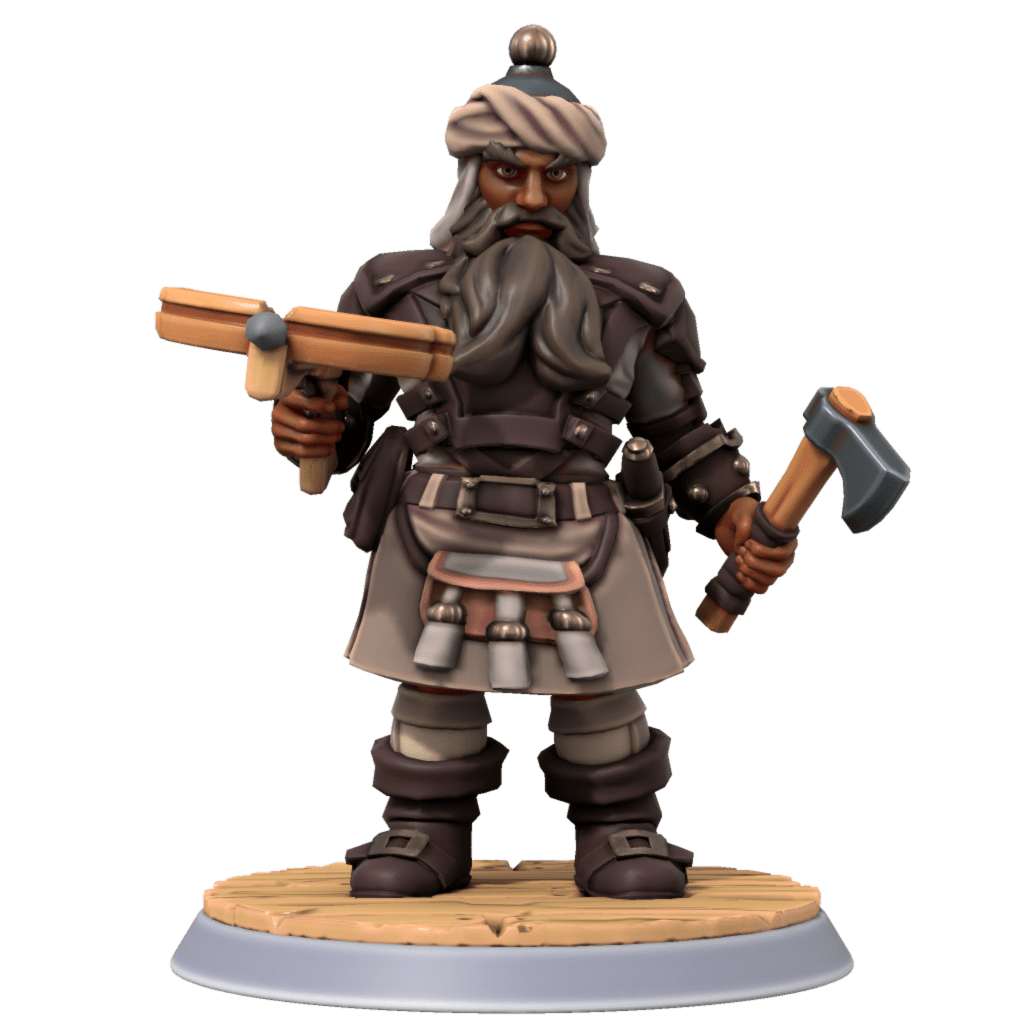
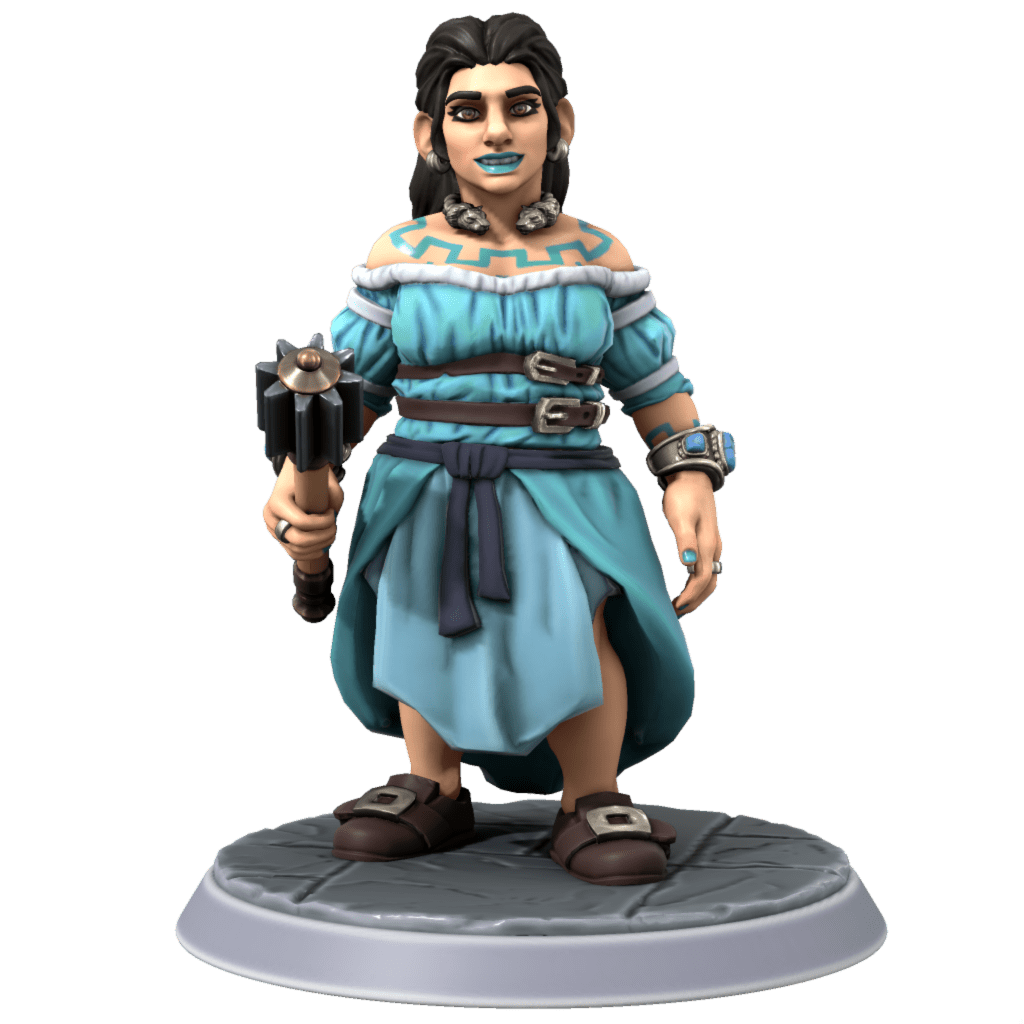
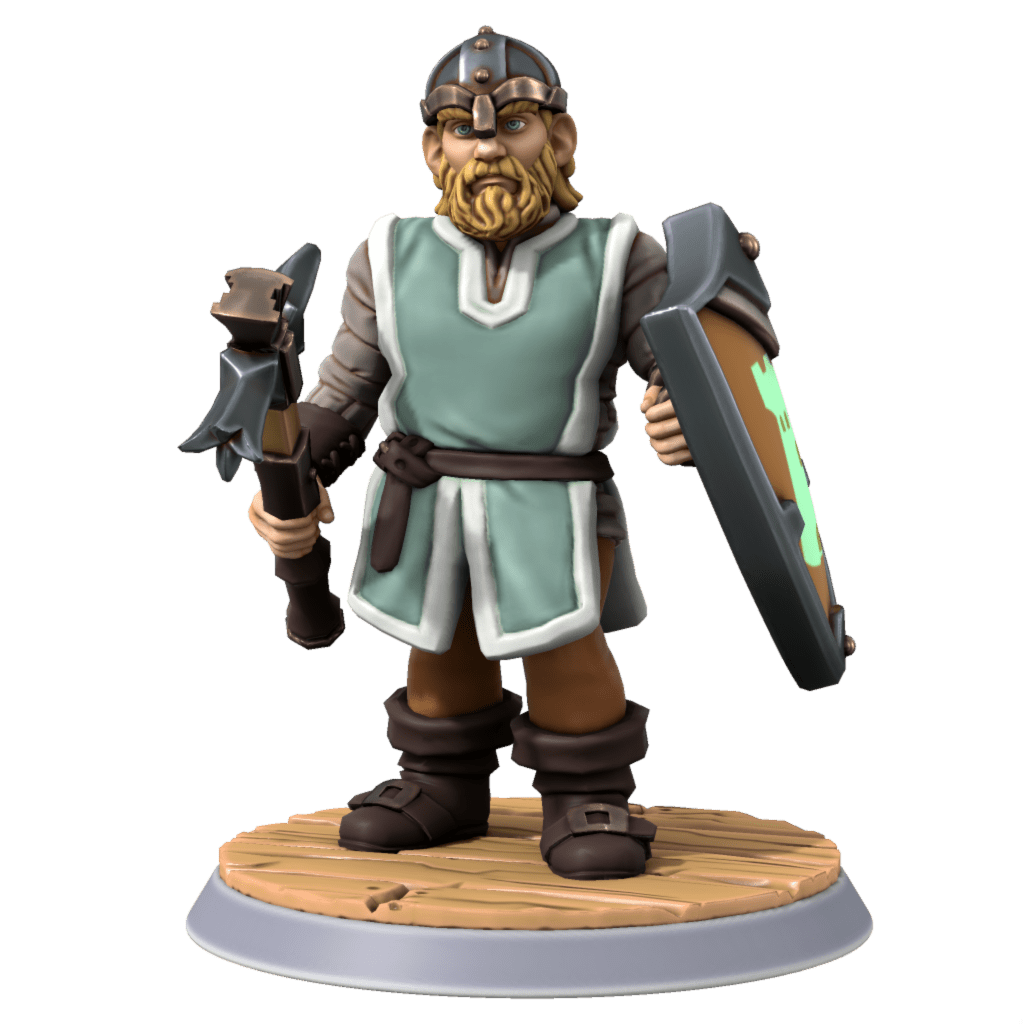
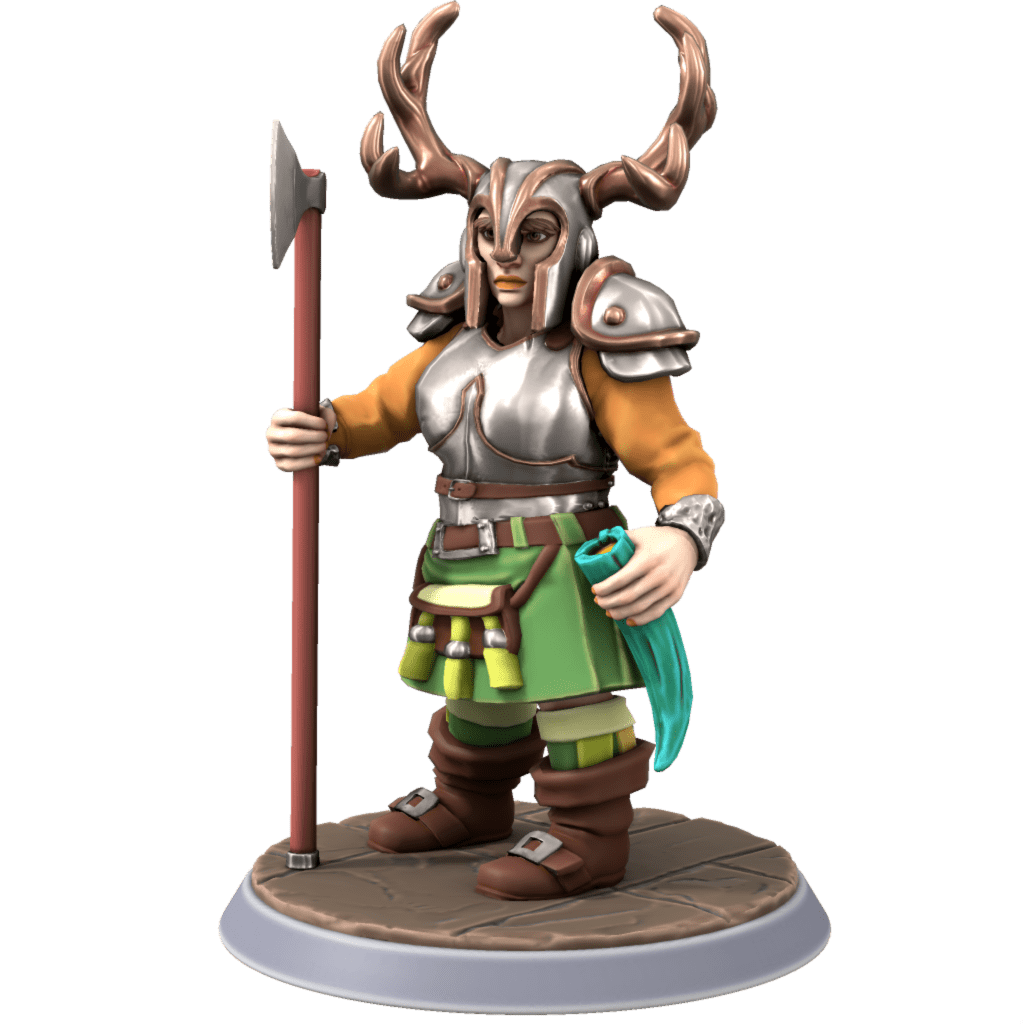
Regardless, many folk often imagine dwarves as many of them appear in their traditional garb: a kilt with a a matching sporran, secured with a sturdy belt with a tough buckle; a pair of durable shoes or boots, also bearing a substantial buckle; a simple tunic well suited for crafting or labor, as well as for fighting; the presence of a small light sidearm, such as a knife, dagger, handaxe, or hammer, which may also double as a tool; and either a head covering such as a hat, headwrap, or scarf, or an open-faced helmet as headwear. Masculine dwarves rarely do not have beards, though it is usually the clan dwarves who would most likely have long and braided or stylized beards and hair. Feminine dwarves rarely have facial hair substantial enough to be beards, though most prefer to be smooth-skinned on their face (due to the influence of multiple non-dwarf cultures).

Other than basic biological differences, the dwarves do not have strict, delineated gender roles in their society. In their minds, all dwarves can work, craft, and fight, and it is a family that rears and apprentices their offspring, and not just the mothers. On the average, dwarves tend to view or consider things from a communal perspective instead of just an individual one. This behavior tends to manifest in lone dwarves considering and adopting friends, companions, and associates into one community of their own consideration, and valuing those relationships just as much as they value those with a clan, family, or community.

For dwarves, magic is regarded as a craft like any other. Some members of their community may strive to refine and master their magic craft, just as others would strive to improve the crafts of their professions or interests. And, in some instances, those dilute and ancient connections between dwarves and their distant forebears, the giants, grants a few dwarves a spark of magic within them. Many dwarves prefer to pursue their talents in magic through practices such as arcane artifice, rather than bardic performance, wizardly study, or a warlock’s pact (though dwarf sorcerers are as common as human sorcerers). For those who follow a spiritual path for their magic, many dwarves prefer the mixed focus of divine or primal power and martial skill typical for a paladin or ranger, while the extremely devout are the only ones to fully commit to a priestly life as a cleric or druid.

While elves and gnomes are known for significant achievements, quite a few of those endeavors would not have been without the discovery and refinement of ores discovered and mined by dwarf communities. Dwarves were the first to discover such precious metals such as gold, silver, and copper, as well as the rarer palladium, platinum, aluminum, and mythryl. They also discovered several varieties of gemstones, including quartzes, beryls, corundums, diamonds, and the harvest of them all: adamants. It was also the dwarves who first made bronze and crucible steel, as well as developing the arduous and labor-intensive process of infusing both bronze and steel alloys with mythryl and adamant dust to make the alloys orichalcum and adamantine.

Though many do not necessarily think of it, the dwarves have made significant contributions to food and cuisine. Due to their penchant for subterranean communities, fungi and root vegetables are their most common crops, while snails, insects, and arachnids are frequently cultivated for food or as bait for catching cavefish. Groups of surface-dwelling dwarves often farm many other crops for consumption, especially grains for bread and beer, as well as raise livestock for meat consumption. Due to their preferred environments, most dwarves rear herd animals such as yak, alpaca, pacas, sheep, and goats, and on occasion pigeons. It has been only during recent times that dwarves began raising other livestock such as quail, chickens, and cattle.

However, dwarves do not strictly raise animals just for use as livestock; they are fond of having pets as well. Some alpacas and sheep are raised only for fiber, but are treated as pets otherwise, while messenger pigeons often are treated well. Many dwarves prefer weasels, degus, and chinchillas, while others may have eagles that naturally nest in the mountains, or big cats like cougars and snow leopards that stalk the mountain ranges. A few dwarves have bats, snails, or spiders as pets.

The dwarves of Iorth are some of the first peoples of the world, said to have been made in the image of their giant forebears by the great overgod Os. Old religious beliefs of the dwarves focus on the reverence of a few demigods said to serve as protectors and champions to the dwarves, but with the rise of the philosophical religions, these practices fell by the wayside. Dwarves are not unified in their spiritual beliefs, since each individual follows what worldview and faith that they prefer. However, regardless of faith, dwarves are fiercely communal, and this sense of community is never threatened or undermined by any differences of opinion regarding faith and spirituality.

Dwarves and their communities are one of the oldest and most stable presences in the whole of Iorth. Their survival and success was due to unity and community, and their failures and downfalls often occurred due to dissent and rivalry. Though not as awe-inspiring as they once were in millennia past, the dwarven civilization is still a wonder to behold.

Gallery

Peoples of Iorth: Humans

The humans of Iorth are as varied and complex as humans found on Earth. They have a wide variety of traits that, over the centuries, have been distributed globally due to trade, travel, and conquest. Initial communities of humans, during the time before the Great Empire, tended to have human cultures based on their immediate environments, with typical physical features for humans indigenous to that region. In general, these groups were referred to by their regional demonym: Estlander, Norlander, Sudlander, Veslander, or Heartlander.

However, with the establishment and dominance of the Great Empire for two millennia, the term “Heartlander” lost its original meaning of humans native to the Heartlands. With the intermingling of peoples and cultures across all human lands, a new diverse yet unified group of people became the norm for a typical Heartlander. The rise of this group is one reason for the widespread use of standardized systems throughout much of Iorth, and for the prevalence of their language, now simply known as the Common Tongue or Common.

As such, humans encountered on Iorth have appearances just as familiar or diverse of any of those humans encountered on Earth. The “Heartlander” demonym is rarely used, except by small isolated groups who still appear and identify as one of the other four old communities of humans. Other human languages once spoken in Iorth are now extinct languages, while the major regional languages of Estlish, Norlish, Sudlish, and Veslish are dead languages.

While the humans of Iorth may associate with various nations or polities which exist in the absence of the Great Empire, distinction of groups based on culture or appearance has fallen by the wayside. This is due to the active sense of unity promoted by the Great Empire, who in turn learned lessons from older and much more stable cultures such as those of the dwarves and elves.

To provide a general sense of progress achieved by the humans of Iorth, some comparisons will be made between them and cultures of Earth’s past. First and foremost, while society has access to inventions such as the coin mill and the printing press, and even access to crucible steel (thanks to the superb skill of dwarf metalworkers), they do not have access to firearms. Though the devices could be crafted, their utility and appeal is significantly decreased due to the presence of magic.

The vulnerability and volatility of gunpowder in a reality capable of creating intense flames or other primal elements makes the propellant unreliable and dangerous. Furthermore, initial attempts at the creation of the cannon for use as a weapon were spectacularly and horribly ruined when, after an initial success of breaching a fortress, the cannon suffered a catastrophic failure after it was engulfed in the flame of an aggressive young red dragon. The intense heat of the dragonflame melted the cannon, effectively sealing the barrel, and the heat and trapped air allowed for ignition of the gunpowder, turning the compromised weapon into a large fragmentary explosive. This experience, along with the revelation that any stores of gunpowder for such weapons could easily be compromised by any number of means of equivalent threat, promptly ended any further development of firearms. The only remaining use for gunpowder is either as spell components, or for use as fireworks or simple explosives.

However, some types of emerging technology (whether created by humans or by gnome innovators) include the telescope, compound microscopes, slide rule, mechanical calculator, and the pendulum clock. Otherwise (with the exception of gunpowder), most humans have access to technology typical of 15th to 16th century Earth.

Though magic is present in the world of Iorth, it is not heavily used or relied on by the human public at large. In many instances, this stems not from a taboo or suspicion of magic, but a matter of availability of practitioners. The study and practice of arcane magic for a wizard, artificer, or bard demands a substantial investment in time that is considerable for humans (given their lifespans). On the other hand, establishing a pact with a potent entity in exchange for power is viewed with dread and suspicion by many. Whether harnessing primal magics or divine power, intense focus and faith in one of the main religious philosophies is necessary for clerics, druids, paladins, and rangers to use those gifts. As a result, those born with an inherent gift for arcane magic (such as sorcerers) are the most commonly encountered variety of magic users.

Furthermore, there are far fewer spellcasters able to use some of the more potent magics of their means compared to initiates capable of simple or foundational spells. The public at large does not have an expectation, much less an idea sometimes, of accessing magics that return the dead to life, or enable instantaneous travel across massive distances, much less creating materials or objects out of nothing. Only grand metropolises, such as Coppergate or the Free City of Rigby, would have public works innovations such as magical streetlights present, as opposed to relying on simple lanterns or torches, or even expecting the public to provide its own light for traversing the community at night. Therefore, the concept of shops selling magical items or providing magic services is generally unknown in human societies.

Even though the Great Empire is in ruins, its legacy can still be seen and felt in countless human communities. Roads created by the Great Empire are still used for trade and travel. The coins used in all nations use the standards and weights established by the Great Empire, and are still made by the Coin Guild. The Common language is the native language of humans, and the names of many towns follow the naming methods practiced by the Great Empire. The orders of nobility, the organizations of administration, military, and many other elements of society are derived from the practices and standards of the Great Empire.

Though significant human communities reside in the Estlands, Norlands, Sudlands, Veslands, and beyond, the largest concentration of human settlements are in the Heartlands. The nations of Aland, Iland, and Uland—the original three nations that formed the Great Kingdom, which later became the Great Empire—still have the largest populations of any human communities on Iorth.

While human communities generally interact well with non-human neighbors (on average), suspicion and sectarianism generally impede peaceful cooperation between human communities and nations. The nations of Aland and Uland are not openly hostile with each other, but it would not take much to lead them into open conflict. The nation of Iland tries its best to remain neutral while also not provoking other nations to hostility against them. The nation of Œland faces threats from not only its southern neighbors, but also the schemes of the totalitarian Archduchy of Hellport to the west. The pirate haven of Covestead harasses all ships in the ocean, regardless of nationality, but also does its best to evade privateering by ships from the Palatinate of Upton. As a result, many non-human nations actively avoid associating with many of the human nations for concern of getting dragged into their rivalries and conflicts.

One practice of the Great Empire that several human communities maintain is the presence of a standing professional military. In some nations, this force is composed of citizens completing a mandatory conscription period, whereas in others it is wholly staffed by a voluntary force. Due to this, many human communities maintain stockpiles of munition arms and armor for use by its forces. Typical types of munition armor are mail shirts or breastplates, often complemented with helmets and shields, while typical types of munition arms include spears, daggers, short swords, hand axes, maces, slings, shortbows, and light crossbows. In some instances, where community members may be supplied arms and armor from a community stockpile in a time of crisis, a simple spear and shield may be issued, with potentially padded or hide armor also available for protection, and shortbows or slings supplied for ranged weapons.

There is no one consistent method of governance used by all of the human communities, though there are certain methods that tend to be used. In some instances, a community may be governed by an elected official or council. In other instances, a local noble may hold reign over an area, or a member of nobility may rule in service to a sovereign of a nation. In the case of the nations of the Heartlands, many of the human nations follow the traditions typical of the Great Empire.

Human communities tend to be the most diverse communities found in Iorth, since they are welcoming to trade and innovation. In many instances, humans meet many non-humans as traders or travelers in human settlements (conversely, it is less likely for non-humans to encounter humans in non-human settlements). Nations such as the Kingdom of Wyland and the Free City of Rigby have such diverse populations as to be considered mixed communities overall, while many other nations are dominated by humans but are accommodating to non-humans.

The prevalence of humans in Iorth can also be seen in the various lineages that may be encountered. Tribes in the more wild reaches of the lands have members who are werebeasts, as well as a fair number of members with werebeast ancestry. Humans, as well as many other folk in Iorth, are likely to have traces of celestial, fiendish, fey, giant, or elemental heritage that can reveal itself over time. While some may regard these individuals as something more than human, general consensus by many sees them simply as just another variety of human. In some instances, these traces of inhuman heritage as seen as a quintessential element of the identity of some human groups. For example, many Norlanders do not just focus on the stereotypical appearance as being essentially Norlander, but also displaying traces of water elemental ancestry as well. The same goes for Sudlanders in regards to fire elemental ancestry, Estlanders and air elemental ancestry, and Veslanders with earth elemental ancestry. Many prominent families in positions of influence and power in those regions have elemental ancestry which frequently is seen in their lineage.

One infamous human community with inhuman ancestry is the serpentkin. These individuals are descendants of an ancient serpent cult who, per their legends, received “blessings” from their patron in the form of serpentine attributes. Some extremely devout members of the cult were provided even greater serpentine attributes, resulting in the creation of creatures such as serpentfolk, nagas, and gorgons. The serpentkin dwell on the isolated island of Koatlan in the southern hemisphere of Iorth, but they actively work to infiltrate other human communities in an effort to undermine or corrupt them from within, in order to spread the influence of their cult. A few serpentkin have fled Koatlan to escape the cult, and they still revere the ancient celestial serpentine beings known as couatls that originally inspired their community, though they remain secretive due to the horrible and prevalent presence of their more aggressive and baleful kindred.

Humans are considered to be one of the younger peoples of Iorth. Whereas the giants, dwarves, and fey are seen as among the first peoples, the humans rose to notability after the glory days of the dwarves and elves were long over. Per legend, the humans were beings created by the god of the heavens, light, and order, An. Humanity on Iorth tends to refer to itself as “mankind,” and their legends claim that the very word “man” means “progeny of An,” or “the children of An.” In earlier times, many human cultures directly worshiped An and many other demigods, but with the rise of the philosophical religions such as the Path of Light, the Path of Nature, or the Path of Awareness, the focus has changed from revering an entity to revering and exemplifying ideals and outlooks. Many elements from the various older practices appear in these religions, but the faithful are aware that they focus on the ideas rather than the individuals.

Overall, the humans of Iorth are as diverse and unique as any of the humans encountered on that far-away world of Earth. They have immense potential and creativity, though they are divided on their values and viewpoints of the world around them.

Gallery

Adaptations: Dungeons & Dragons (5th ed., 2024 revision)

The realm of Iorth is familiar to many who may know of Dungeons & Dragons. However, there are some qualities of settings based using Dungeons & Dragons that do not directly match with elements in the world of Iorth. As such, here are some simple tables that makes comparisons between elements found in a D&D setting that would be different (or even non-existent) in the world of Iorth.

Cosmology

The various extradimensional spaces beyond Iorth are notably different from how they appear and are referred to in a standard D&D campaign. For Iorth, the cosmos exists as a cosmic axis within the Astral Plane, which has Heaven at the highest end and Hell at the lowest end. At the center of the axis is the Prime Material Plane, Iorth, and its corresponding transitive and reflective planes with it. Orbiting the cosmic axis are the elemental planes, and several demiplanes.

D&D ConceptIorth VersionCategoryALNotes
AstralAstralTransitiveAs per source material. Has a diaspora of light elves, as well as colonies of githyanki and githzerai.
ElementalElementalPlaneFour separate planes, each of which orbit the Prime Material Plane.
EtherealEtherealTransitiveAs per source material.
Far RealmThe HorrorDemiplaneNEA strongly bizarre, alien, and malign plane. Home of several aberrations.
FeywildThe ShimmerReflectiveCG/CNHome of the light elves and many fey. A plane with CG/CN tendencies. Contains multiple Domains of Delight.
LimboChaotic MaelstromDemiplaneCNSource of the slaad, grung, grippli, and bullywugs; has infestations of hezrou demons and hydroloths.
Lower Planes & Negative PlaneHellish AbyssPlaneNE/CEOverall equivalent to Carceri/Tartarus. Home of the infernal city of Pandemonium.
MechanusOrderly PatternDemiplaneLNA subset of this realm, known as The Gears, is the source of construct-like beings such as modrons, autognomes, and warforged.
Prime MaterialPrime MaterialPlaneThe default plane of the setting, where the world of Iorth exists.
ShadowfellThe ShadowReflectiveLN/LEHome of the dark elves and many undead. A plane with LN/LE tendencies. Contains multiple Domains of Dread.
Sigil & The Outlands; Radiant Citadel*AushausDemiplaneNA bizarre magitechpunk extraplanar realm where beings of all planes of existence and realities congregate. An amalgamation of Planescape, Spelljammer, Eberron, and Ravnica; also can have Radiant Citadel elements present.
Upper Planes & Positive PlaneHeavenly ParadisePlaneNG/LGOverall equivalent to Bytopia/Twin Paradises. Home of the celestial city of Arcadia.
Cosmological Conversions of Iorth

Folk & Creatures

The various beings of Iorth and its cosmological reaches, and how they vary from a standard D&D campaign.

The varieties of dragons that exist in Iorth is meant to purposefully echo the six varieties of dragons encountered in the Basic D&D Red Box set of the early 1980’s. Furthermore, some beings, such as deep gnomes, duergar, derro, kuo-toa, sahuagin, and the like do not exist in Iorth, though there are beings similar to them in the same environments found in Iorth. Finally, certain creatures like particular aberrations or monstrosities that could be deemed “iconic” for D&D are not creatures native to Iorth at all, but are actually extradimensional invaders from within and far beyond the demiplane known as the Horror.

D&D ConceptIorth VersionNotes
AasimarAngelkinThe current descendants of ancient humanoids who interbred with deva angels and titans.
Basilisks & CockatricesBasilisks & CockatricesIn Iorth, the basilisk is a large legless serpentine creature that can display a hood when threatening, much like a cobra. In addition, “cockatrice” is the term for a hatchling or juvenile basilisk, which cannot petrify victims with a gaze, but can do so through a bite.
BugbearsBugbearsThough generally the same statistically, they are now the same height as hobgoblins (between 4’ and 5’ tall). Most serve as bodyguards and enforcers for prominent goblins or hobgoblins.
ChangelingsChangelingsThe current descendants of ancient humans who interbred with fey.
Demons & Tanar’riDemonsThe prisoners of Hell, who are watched over by the devils. They are opposed by the titans.
DerroDerogar
(Troglodytes)
The twisted, insane descendants of dwarves and gnomes interbred for use by the nightmarish creatures from the Horror, the derogar, or troglodytes as they are commonly known, are the dominant culture dwelling in the depths of the Nether Lands.
Devas, Planetars, & SolarsAngelsAll three of these celestial entities are known as angels, who reside in Heaven. They stand in opposition to the devils.
Devils & BaatezuDevilsThe jailers of Hell, who watch over the other fiendish beings imprisoned there. They are opposed by the angels.
DragonbornDrakinThe current descendants of ancient lizardfolk who interbred with dragons millenia ago.
Dragons, BlackBlack Dragons
(Iron Dragons)
They are Chaotic-aligned by default. Good, benevolent black dragons are known as iron dragons, who gain the shapeshifting ability of metallic dragons.
Dragons, BlueBlue Dragons
(Sapphire Dragons)
They are Lawful-aligned by default. Good, benevolent blue dragons are known as sapphire dragons, who gain the shapeshifting ability of metallic dragons.
Dragons, GoldYellow Dragons
(Gold Dragons)
Yellow dragons have a thunder-based breath weapon only, and lack the shapeshifting and secondary breath weapon of metallic dragons. They are Lawful-aligned by default. Good, benevolent yellow dragons are known as gold dragons, who gain the shapeshifting ability of metallic dragons.
Dragons, GreenGreen Dragons
(Emerald Dragons)
They are Lawful-aligned by default. Good, benevolent green dragons are known as emerald dragons, who gain the shapeshifting ability of metallic dragons.
Dragons, Metallic & GemActual metallic and gem dragons are not indigenous to Iorth. They may be encountered in a demiplane or in Aushaus.
Dragons, RedRed Dragons
(Ruby Dragons)
They are Chaotic-aligned by default. Good, benevolent red dragons are known as ruby dragons, who gain the shapeshifting ability of metallic dragons.
Dragons, WhiteWhite Dragons
(Silver Dragons)
They are Chaotic-aligned by default. Good, benevolent white dragons are known as silver dragons, who gain the shapeshifting ability of metallic dragons.
Elves, AstralLight ElvesNative elves of the Shimmer (Feywild), though many now reside in the Astral Plane. Have white hair and skin, with intense blue or green eyes. Naturally ambidextrous.
Elves, DrowCave ElvesA naturally subterranean-dwelling elf heritage. Generally look the same as drow elves from D&D.
Elves, EladrinFey ElvesNative elves of the Shimmer (Feywild).
Elves, SeaSea ElvesSea elves are said to have traces of triton heritage in their past, which enabled them to live underwater. Many sea elves serve as benevolent guardians and tenders of the waters they reside in.
Elves, Shadar-KaiDark ElvesNative elves of the Shadow (Shadowfell). Have black hair and skin, with fiery red or yellow eyes. Naturally ambidextrous.
EmpyreansTitansThe titans are the progenitors and survivors of the long-lost giants of ancient times who reside in Heaven. They stand in opposition to the demons.
GenasiJinkinThe current descendants of ancient humanoids who interbred with genies.
Giants, CloudCloud GiantsThese giants are hill giants permanently transformed by wearing and attuning to a belt of cloud giant strength.
Giants, FireFire GiantsThese giants are hill giants permanently transformed by wearing and attuning to a belt of fire giant strength.
Giants, FrostFrost GiantsThese giants are hill giants permanently transformed by wearing and attuning to a belt of frost giant strength.
Giants, HillHill GiantsThe only naturally-occurring variety of true giant that exists in Iorth, ever since the Giant-Dragon War. Many still wear and are attuned to their personal belts of hill giant strength.
Giants, StoneStone GiantsThese giants are hill giants permanently transformed by wearing and attuning to a belt of stone giant strength.
Giants, StormStorm GiantsThese giants are hill giants permanently transformed by wearing and attuning to a belt of storm giant strength.
GoblinsGoblins and KoboldsAs generally depicted in D&D, though they tend toward various shades of green complexions. There are some smaller, weaker offshoots who have bluer complexions, who are known as kobolds. Some kobolds tend to be more in tune with learning and developing magic.
GoliathsGiantkinThe current descendants of ancient humans who interbred with giants millenia ago. Their heritage is too diminished to fully activate and bond with the elemental magics that true giants can use.
HobgoblinsHobgoblinsHobgoblins stem from a mixed heritage of goblins, orcs, and humans. Though generally the same statistically, they are now between 4’ and 5’ tall.
Jhorgun’taalOrcanA people derived from pairings between orcs and humans, the orcan are commonly encountered throughout Iorth.
KenkuTenguThe tengu are a wingless avian humanoid species that reside in remote mountainous regions. Some of them are shapeshifters, transforming into wereravens.
KhoravarElfanA people derived from pairings between elves and humans, the elfan are commonly encountered throughout Iorth.
KoboldsSaurids and SquamidlingsA smaller offshoot of ancient lizardfolk who reside underground in burrows or cave systems. Some squamidlings mature into larger versions, simply known as squamids.
Kuo-ToaDeeplingsThe deeplings are a subterranean amphibian humanoid species bred by the derogar for use as servants and laborers. They naturally secrete a slippery, rancid substance onto their skin to help them squeeze through tight underground passages.
MedusasGorgonsA serpentkin fanatic “blessed” by their serpentine Great Old One patron into their current form, being gifted the powers of a basilisk. They have serpentine tails instead of legs.
Merrow, Sahuagin, & LocathahMerrowMerrow are aggressive, predatory aquatic beings who terrorize all life in the sea and on the shore. They hate merfolk and sea elves in particular. Merrow are prone to mutation, with some being larger than normal, having additional limbs, or even merfolk-like tails instead of legs.
Naga & Yuan-TiSerpentfolkSerpentkin fanatics “blessed” by their Great Old One master into a more powerful and horrible form.
Pureblood Yuan-TiSerpentkinHumans who interbred with serpentine beings from the Horror centuries ago, and who now worship a serpentine Great Old One.
SalamandersFirewurmsThough the same as their in-game counterparts, these evil elemental beings are servants of the serpentine patron of the serpentkin.
ShiftersWerekinThe current descendants of ancient humans who interbred with werebeasts.
TieflingsDevilkinThe current descendants of ancient humanoids who interbred with incubi, succubi, and cambions.
TroglodytesSquamidsThese creatures are larger and more mature versions of the squamidlings.
Trolls & HagsTroll & HagsTrolls and hags are actually members of the same species in Iorth that go through extreme sexual dimorphism when they mature. The offspring of trolls and hags are genderless creatures known as gremlins, which undergo significant transformation when they reach puberty. At the age of puberty, a gremlin randomly develops into a male or female. In males, the giant heritage dominates and the gremlins mature into trolls. In females, the fey (or fiend) heritage dominates and transforms them into hags. Males tend to be the more prevalent among gremlins, but females often develop in groups of three, which many posit as a natural development and establishment of a future coven of hags.
XvartsZwꜷrftsA magical mutation of mixed gnome and goblin heritage “created” by the ancient mage Melgar. Zwꜷrfts are very aggressive and xenophobic, and often clash with anyone near their territory.
Yugoloths, Daemons, Succubi, Incubi, & DemodandsFiends or DemodevilsImmigrants from the Horror and the original occupants of Hell, demodevils are servants of the deity of evil.
Creature Conversions for Iorth

Adaptations: Factions of Iorth

Belonging to a faction sometimes means having responsibilities, but it also carries with it support and rewards for service. If you ever switch factions or leave a faction, you lose all ranks and renown with the old faction, and must start at the lowest rank with zero renown with your new faction. For simplicity purposes (especially for adapting published Dungeons & Dragons adventures for the Iorth setting), here are the rough equivalents of the five Forgotten Realms factions in Iorth.

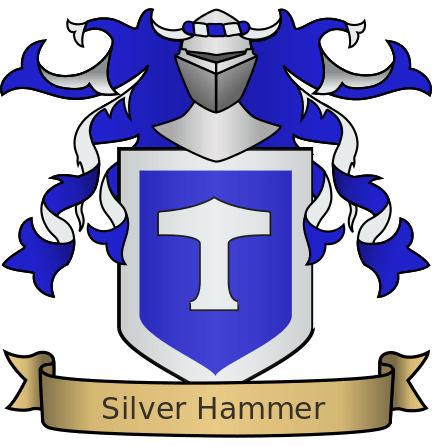
Harpers → Silver Hammer

The closest equivalent to the Harpers in Iorth is the Silver Hammer. A scattered network of agents and spies who advocate equality and covertly oppose the abuse of power. The organization is benevolent, knowledgeable, and meritorious. The Silver Hammer try not to disturb the balance of power too much, but they actively work to thwart evil, utter chaos, and unrestrained tyranny throughout Iorth.

Goals

  • Gather information throughout Iorth.
  • Promote fairness and equality by covert means.
  • Thwart tyrants and leaders, governments, and organizations that grow too powerful.
  • Aid the weak, poor and oppressed.

Beliefs

  • One can never have too much information or arcane knowledge.
  • Too much power leads to corruption. The abuse of magic must be closely monitored.
  • No one should be powerless.

Member Traits
Agents of the Silver Hammer are trained to act alone and rely on their own resources. When they get into scrapes, they don’t count on their fellow agents to rescue them. Nevertheless, the Silver Hammer are dedicated to helping one another in times of need, and friendships between agents are nigh unbreakable. Masterful spies and infiltrators, they use various guises and secret identities to form relationships, cultivate their information networks, and manipulate others into doing what needs to be done. Although most agents of the Silver Hammer prefer to operate in the shadows, there are exceptions.

Member Ranks of the Silver Hammer

  • Keeper (rank 1)
  • Protector (rank 2)
  • Defender (rank 3)
  • Warder (rank 4)
  • Guardian (rank 5)

Order of the Gauntlet → Cloister of the Chalice

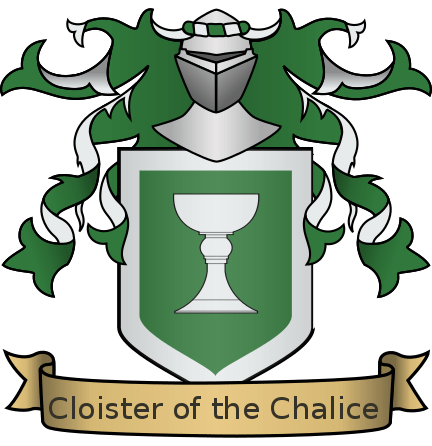
The closest equivalent to the religious Order of the Gauntlet in Iorth is the Cloister of the Chalice. An organization sworn to protect a potent artifact known simply as the Chalice Celestial, the clerics, monks, paladins, and other faithful of the faction work to eradicate the wicked and chaotic in the world, using honorable, just, and noble means. The organization is honorable, vigilant, and zealous.

Their faith extends not only to their beliefs, but also to the fellow members of the Cloister, and the bonds formed by members of the closer are as strong as those of a family, if not stronger. Whether alone or with other members of the Cloister, members seek to be pure exemplars of their faith and their beliefs.

Goals

  • Be armed and vigilant against evil.
  • Identify evil threats such as secretive power groups and inherently evil creatures.
  • Enforce justice.
  • Enact retribution against evil actions—do not strike preemptively.

Beliefs

Faith is the greatest weapon against evil—faith in one’s religion, one’s friends, and one’s self.
Battling evil is an extraordinary task that requires extraordinary strength and bravery.
Punishing an evil act is just. Punishing an evil thought is not.

Member Traits
The Cloister of the Chalice is a dedicated, tightly knit group of like-minded individuals driven by religious zeal or a finely-honed sense of justice and honor. Friendship and camaraderie are important to members of the order, and they share a trust and a bond normally reserved for siblings. Like highly motivated soldiers, members of the Cloister of the Chalice seek to become the best at what they do and look forward to testing their mettle. There are few, if any, “lone wolves” in this organization.

Member Ranks of the Cloister of the Chalice

  • Acolyte (rank 1)
  • Ovate (rank 2)
  • Initiate (rank 3)
  • Disciple (rank 4)
  • Justiciar (rank 5)

Emerald Enclave → Golden Hart

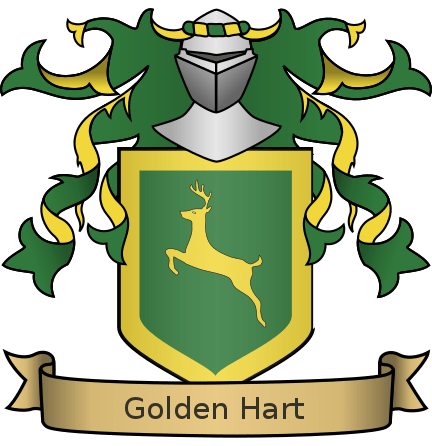
The closest equivalent to the Emerald Enclave in Iorth is the Golden Hart. Protectors of the wilderness and aides to those seeking to survive the wild, the barbarians, rangers, druids, and other wilderness folk of the faction seek to keep the wild and civilization in balance, and enable all to live in harmony with the natural forces which surround them. The organization is decentralized, hardy, and reclusive.

Goals

  • Restore and preserve the natural order.
  • Destroy all that is unnatural.
  • Keep the elemental forces of the world in check.
  • Keep civilization and the wilderness from destroying each other.

Beliefs

  • The natural order must be respected and preserved.
  • Forces that upset the natural order must be destroyed.
  • Civilization and the wilderness must learn to coexist peacefully.

Member Traits

Members of the Golden Hart are spread far and wide, and usually operate in isolation. They learn to depend on themselves more than others. Survival in a harsh world also demands great fortitude and mastery of certain fighting and survival skills. Members of the Golden Hart who dedicate themselves to helping others survive the perils of the wilderness are more social than others who are charged with defending sacred glades and preserving the natural balance.

Member Ranks of the Golden Hart

  • Runner (rank 1)
  • Strider (rank 2)
  • Courser (rank 3)
  • Tracker (rank 4)
  • Pathfinder (rank 5)

Lords’ Alliance → Circle of the Crown

The closest equivalent to the Lords’ Alliance in Iorth is the organization known as the Circle of the Crown. Consisting of agents from various nations around Iorth, the Circle works to bring about alliances between nations, and ultimately, bring about the return of the Great Empire. The organization is secretive, militant, and political. The Circle of the Crown argues that only allegiances and unity can prevent the threats to civilization and prosperity from destroying communities and nations.

Members of the Circle consist primarily of minor nobles, wealthy merchants, and their family and loyal servants. They often come in conflict with loyalists of each nation’s liege, as well as those opposing schisms within their own organization.

Goals

  • Ensure the safety and prosperity of cities and other settlements of Iorth.
  • Maintain a strong coalition against the forces of disorder.
  • Proactively eliminate threats to the established powers.
  • Bring honor and glory to one’s leaders and one’s homeland.

Beliefs

  • If civilization is to survive, all must unite against the dark forces that threaten it.
  • Fight for your realm. Only you can bring honor, glory, and prosperity to your lord and homeland.
  • Don’t wait for the enemy to come to you. The best defense is a strong offense.

Member Traits

To seek out and destroy threats to their homelands, agents of the Circle of the Crown must be highly trained at what they do. Few can match their skills in the field. They fight for the glory and the security of their people and for the lords who rule over them, and they do so with pride. However, the Circle of the Crown can only survive if its members “play nice” with one another, which requires a certain measure of diplomacy. Rogue agents within the Circle of the Crown are rare, but defections have been known to occur.

Member Ranks of the Circle of the Crown

  • Aide (rank 1)
  • Deputy (rank 2)
  • Envoy (rank 3)
  • Legate (rank 4)
  • Consul (rank 5)

Zhentarim → Lordless Legion

The closest equivalent to the Zhentarim in Iorth is the Lordless Legion. It is an unscrupulous coalition of mercenary companies, thieves’ guilds, assassin cabals, freelance sorcerers, and other individuals concerned with expanding its influence and power throughout Iorth. The organization is ambitious, opportunistic, and aggressive.

  • Goals
  • Amass wealth.
  • Look for opportunities to seize power.
  • Gain influence over important people and organizations.
  • Dominate Iorth.

Beliefs

  • The Lordless Legion is your family. You watch out for it, and it watches out for you.
  • You are the master of your own destiny. Never be less than what you deserve to be.
  • Everything—and everyone—has a price.

Member Traits

A member of the Legion thinks of himself or herself as a member of an elite society, and relies on the organization for resources and security. However, members are granted enough autonomy to pursue their own interests and gain some measure of personal power or influence. The Lordless Legion sees itself as a coterie of the elite. It promises “the best of the best,” although in truth, the Legion is more interested in spreading its own propaganda and influence than investing in the improvement of its individual members.

Member Ranks of the Lordless Legion

  • Bravo (rank 1)
  • Rutterkin (rank 2)
  • Waghalter (rank 3)
  • Filcher (rank 4)
  • Sharper (rank 5)