There are only four genuine religions in Iorth that allows some devout worshipers to use divine magic or divine-based powers in one form or another. All of these religions are not based on devotion to a deity, but rather a philosophy or view on life. Though there are several divine beings (such as tutelary demigods, saints, or place-spirits) mentioned in the religions of Iorth, the doctrine taught by followers of these deities blends with the philosophies of one of the four main philosophies. The four different religious philosophies, or paths, are:
- the Path of Awareness,
- the Path of Light,
- the Path of Nature, and
- the Path of Darkness.
Religious Hierarchy
Despite which religious philosophy is espoused, all major religions in Iorth follow the same hierarchical structure. It consists of four tiers:
- the brothers & sisters are young members of the religious order (not necessarily bound to a temple complex), and often the wandering members of the faith, acting as missionaries or travelling with adventurers;
- the fathers & mothers are veteran members of the religious order (once again, not necessarily bound to a temple complex), and often the clergy-in-residence for a thorpe or the travelling clergy to accompany reputable members of the faith;
- the priests & priestesses are members in charge of a temple complex, typically found in a towne;
- & finally, the high priests & high priestesses of a nation, region, or large area (ranking over all lower-ranked religious officials in their area), residing in a capital towne or major metropolis while managing a major sacred or revered temple or site of the faith.
Above these tiers, in a unique and revered station, are the Exemplars of the Paths. These are maximum level individuals (typically NPCs) who irrefutably embody the philosophy of their chosen faiths. Each of the Exemplars has a unique title, the reputation as being the most knowledgeable and informed about their faith and its application to the world, and the unspoken unofficial acknowledgement as the head of their established faith.
| Faith | Portfolio | AL | Symbol |
| Path of Awareness | Balance, control, diligence, passion | Any | Triquetra |
| Path of Light | Good, courage, love, truth | Any non-Evil | Ankh |
| Path of Nature | Nature, elements, life-death-rebirth | Any | Crescent moon |
| Path of Darkness* | Evil, cowardice, falsehood, hatred | Any Evil | Chaos arrows |
Faiths of Iorth
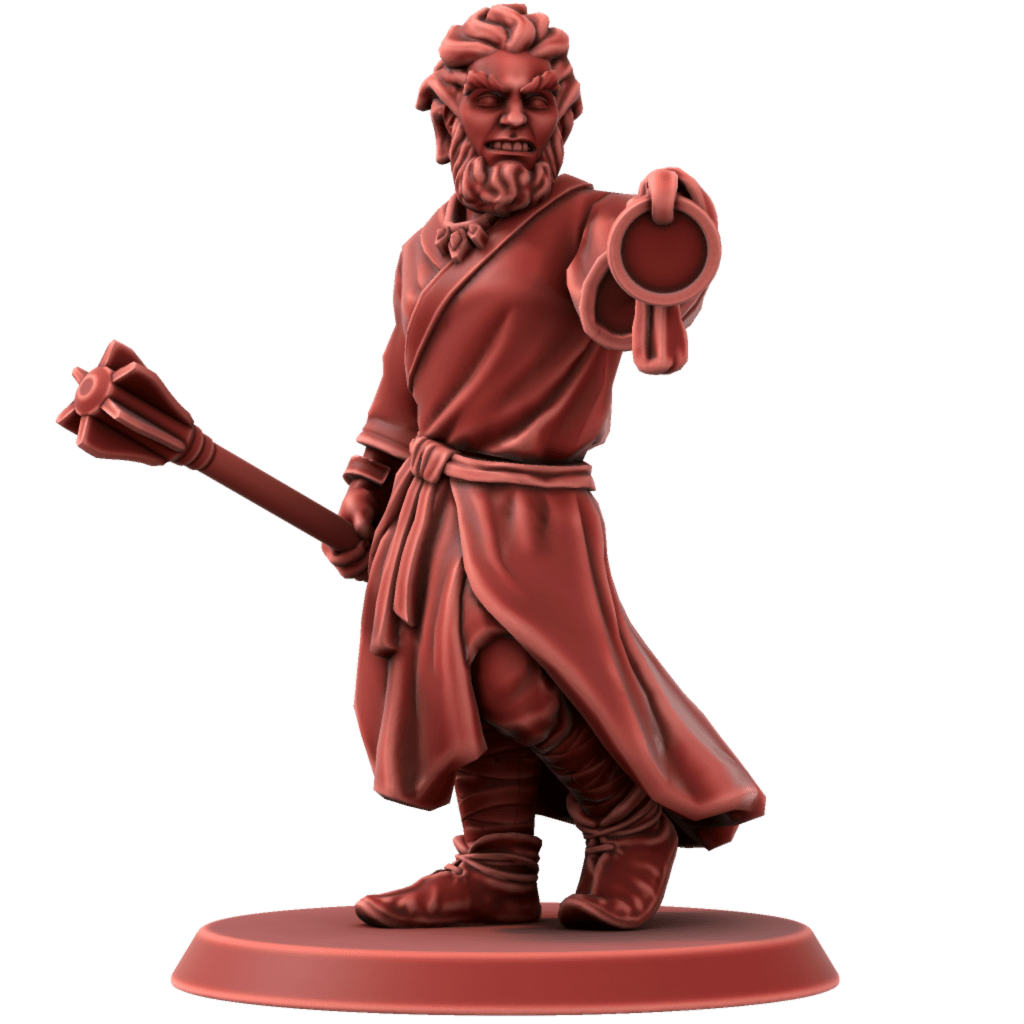
Most adventuring priests of the Path of Light tend to be clerics, while a majority of the adventuring priests of the Path of Nature tend to be druids. The Path of Awareness has several monks serving as clergy. A majority of active priests for the Path of Darkness are actually warlocks (forming a pact with an adjutant fiend serving Ur, or some other highly ambitious fiend), though there are some genuine divine spellcasters in their ranks.
Cults and other “fringe religions” of the setting typically use unique titles fitting their structure, but, these are exceptions rather than the rule. Those will be reviewed after the four Paths.
Edition Consideration: Religions of Iorth
This articles was originally written amidst the original development of D&D for 5th edition (beginning in 2014). With the recent updates to the rules with the 50th Anniversary and the 2024 core rulebooks, there has been some changes to the character classes and their archetypes. Also, to make the setting more accommodating for use with prior editions of the game, as well as with retroclones or even other game systems, use the following rules of thumb for implementing the religions of Iorth:
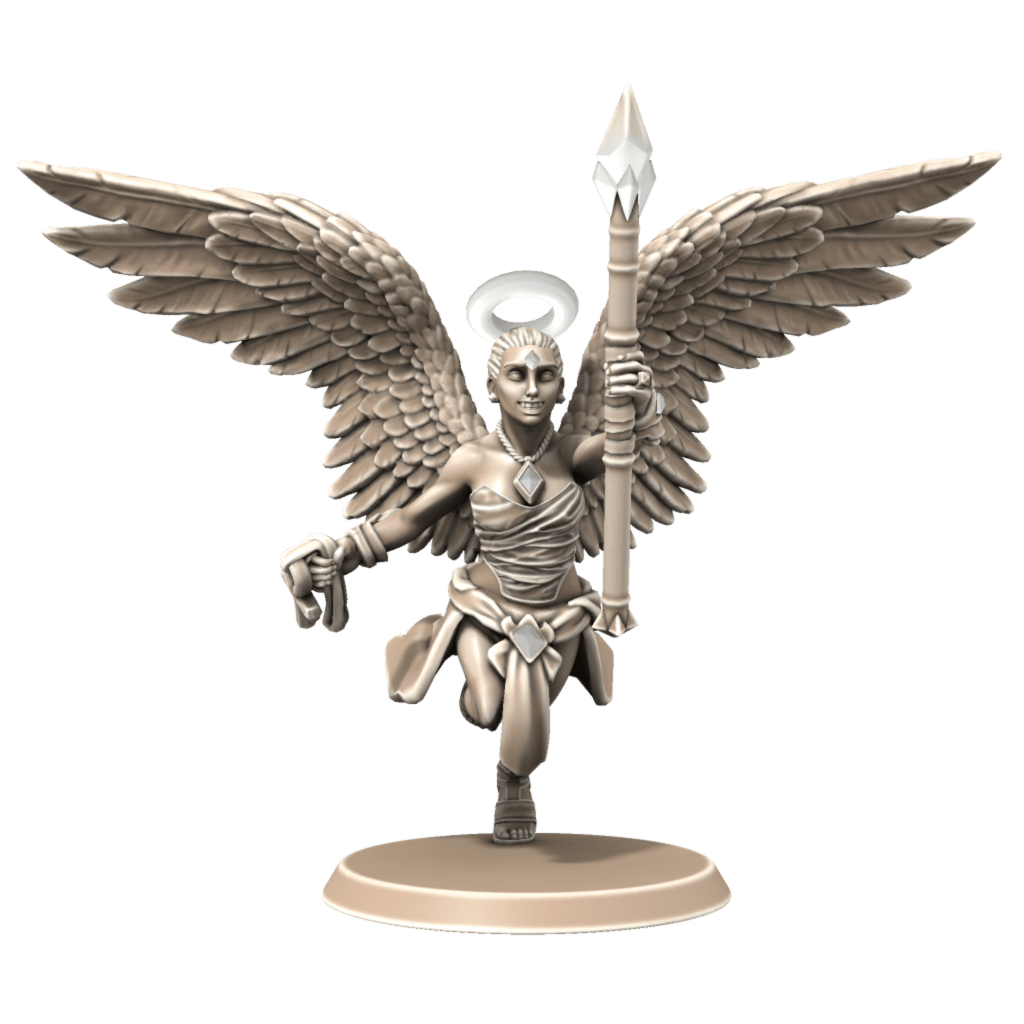
- Only non-Evil aligned characters may be followers or priesthood of the Path of Light. A majority of those divinely-empowered servants of the Path of Light will be clerics, paladins, and even monks, though druids, rangers, and other classes may be adherents. However, only warlocks with a Celestial patron tend to revere the Path of Light. Members of the Path of Light are generally the most benevolent of all toward all they encounter, even toward those of other faiths (though they will always be wary of those in service to the Path of Darkness, both as a matter of doctrine and of common sense).
- Members of the Faith: predominantly Good-aligned characters, including those generally benevolent Neutral-aligned characters.
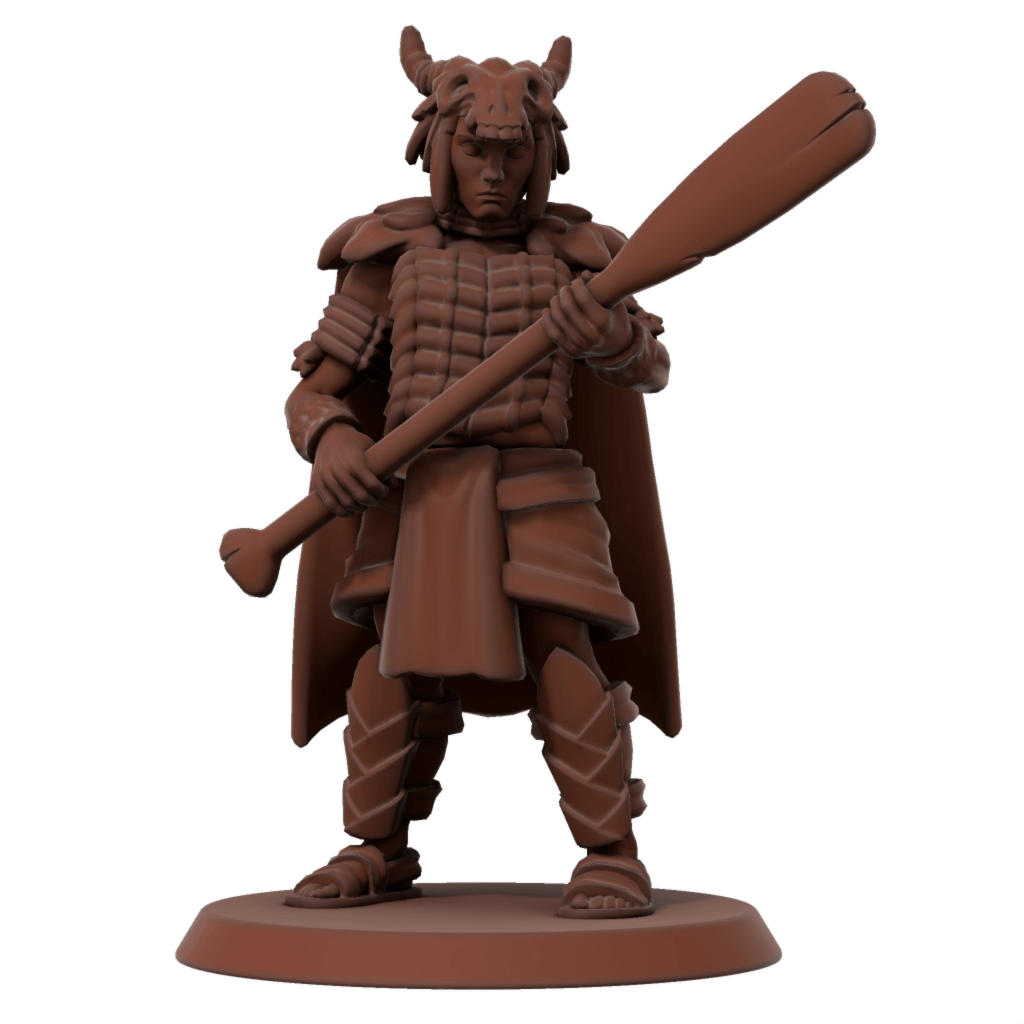
- Characters of any Alignment or class may revere the Path of Nature. However, a vast majority of primal-empowered servants of the Path of Nature are druids, rangers, or barbarians. A few clerics may follow the Path of Nature, while paladins of the Oath of the Ancients or monks who are Warriors of the Elements are the only ones to embrace the Path of Nature. Primarily warlocks with an Archfey patron tend to follow the Path of Nature.
- Members of the Faith: predominantly nature-oriented characters (barbarians, druids, rangers, etc.).
- Characters of a Neutral alignment (NG, LN, N, CN, NE) predominantly embrace the Path of Awareness. A majority of the divinely-empowered servants are a few clerics, druids, paladins, or rangers, though many monks often embrace this religion.
- Members of the Faith: predominantly goal-driven characters, tending toward civilization-base concerns (instead of nature and wilderness-based concerns, as befitting the Path of Nature). Most have a Neutral or partial Neutral alignment.
- Only Evil-aligned characters may be followers of the Path of Darkness. With the exception of the Archduchy of Hellport or few other strongholds of true Evil, this religion is forsaken and outlawed by most communities throughout Iorth. It takes genuine, committed, frequent, and willful malice to follow or gain power within this particular faith. Many Evil warlocks with Fiendish patrons tend to revere the Path of Darkness. Furthermore, it is important to remember than adherents of the Path of Darkness are not simply members of a team in opposition to other faiths, but rather are genuinely cruel and wicked beings utterly willing to betray their own as much as any stranger or foe. They are best suited as unrepentant adversaries and threats to adventurers rather than as potential members of their ranks.
- Members of the Faith: Purely Evil-aligned characters. All are deceitful, treacherous, and cruel. Any cooperation between the faithful is actually manipulative and self-serving, meant to enable one to achieve greater power. Most swear allegiance or make deals with fiendish or horrid malign eldritch powers.
The Path of Awareness
The Path of Awareness is a path of study and self-enlightenment. Followers of the Path of Awareness focus on self-discipline to attain a greater level of awareness of themselves and the world around them. Several monks favor the Path of Awareness.
The core philosophy of the Path of Awareness is that by following the Tenets of Control, Passion, and Diligence, one may truly aware of the world around them. Awareness can be a tool for personal power or the betterment of mortalkind, depending on how one uses it.
However, the intent of one’s actions and the result are quite different, and therefore one must be cautious about acting with limited awareness. Ignorance may be manipulated, but promoting ignorance is shameful. However, one must be responsible with sharing awareness, since that awareness may be misused and cause more harm than good. Ultimately, by being logical, disciplined, and ethical, the best results may be achieved. Undeath is a sacrifice of the body to maintain the mind and spirit, though the cost may outweigh the gain. Because of this, undeath is seen as a risk that only a few dare to take.
Followers of the Path of Awareness may believe in higher powers, but they are willing to concede that said higher powers may only be just other beings that are just further along in spiritual progression, rather than incarnations of the apex of all that is. The only deities worth noting are those who promote enlightenment through awareness.
The Exemplar of the Path of Awareness is the Curate, who follows the Tenets in order to discover, learn, and share awareness to those worthy of it.
Commandments of the Path of Awareness
- Passion fires the drive to learn and discover.
- Control guides the actions to achieve.
- Diligence bolsters the effort to persist and complete.
- Everyone must journey along the Path on their own in order to obtain the true goal of awareness.
- One must seek Balance within before helping achieves Balance around them.
The Path of Light
The Path of Light is a reverence of everything good and benevolent in the world. Followers of the Path of Light believe that it is in the best interests of the world to promote benevolence towards others over selfishness. Most clerics strongly favor the Path of Light.
The core philosophy of the Path of Light is that through devotion to the core Principles of Truth, Love, and Courage, one may be able to ascend the limits of mortal potential and bring benevolence to the world. Law and order may assist in providing guidelines to help some follow these Principles, but mindless adherence to law and order can subvert or distract one from the true goal or even be a hindrance to progress; the goal is to be rational, dedicated, and harmonious. Those who willingly succumb to the dark Impulses should be watched, for they may intend to destroy everyone around them.
Death is a natural part of life, but one does not need to cause death unless life is genuinely threatened. Undeath is generally immoral, since it is either the result of one succumbing to their base Impulses to avoid receiving the just punishment their life’s misdeeds, or the result of defiling the bodies of the dead for personal gain or power. However, some few may avoid death through unlife to atone for misdeeds made during their lives, or they may sacrifice a peaceful rest in the afterlife to protect those principles they held so dearly in life (which explains benevolent ghosts and the like).
Followers of the Path of Light may believe in higher powers, but despite the existence (or non-existence) of deities, adhering to the spirit of the Principles rather than a set dogma of a higher power is paramount. Besides, the deities that are truly benevolent promote ideals which are in line with the core ideas of the Path of Light. Thus, higher powers may serve as good examples, but they should not be purely seen as flawless masters to follow blindly.
The Exemplar of the Path of Light is the Oracle, who travels the world, applying the Principles through word and deed, and practicing benevolence for the sake of benevolence alone.
Commandments of the Path of Light
- Be honest and truthful, but not cruel.
- Be caring and compassionate, but not slavish.
- Be brave and valorous, but not foolhardy.
- Use reason, show dedication, and promote harmony in the world.
- Benevolence benefits everyone.
The Path of Nature
The Path of Nature is a reverence for the ways and power of the natural world. A general respect of nature and the way of nature is paramount in this philosophy. Druids strongly favor the Path of Nature.

The core philosophy of the Path of Nature is that life and death are inherently linked to the natural way of the world. The desire to exist and survive is a natural impulse, and there are many ways possible to promote this. However, survival may only continue if one is aware and in harmony with the natural world around oneself. Death, for example, is necessary for life to continue: however, there must be life for death to exist.
Along the same lines, concepts such as good and evil or order and chaos are just as interdependent as life and death are: one cannot exist without the other. Undeath is a perversion of nature, and disrupts the harmony of natural existence. It promotes constant stagnation and decay with no chance of growth and rebirth with its presence. Though some things of unlife may still exist for good reason (such as restoring natural harmony), they should succumb to true death once that purpose is achieved.
Followers of the Path of Nature may believe in higher powers, but ultimately, they believe that those higher powers are merely aspects or facets of the larger, dominant force of nature that surrounds them. Though these deities may look like they are in opposition, they are merely playing their parts that fit within the grand natural harmony that permeates everything.
Followers of the Path of Nature may believe in higher powers, but ultimately, they believe that those higher powers are merely aspects or facets of the larger, dominant force of nature that surrounds them. Though these deities may look like they are in opposition, they are merely playing their parts that fit within the grand natural harmony that permeates everything.
The Exemplar of the Path of Nature is the Warden, who minds the needs and whims of the natural world, and seeks to prevent any from unduly disrupting is natural course.
Commandments of the Path of Nature
- Allow nature to thrive as it should, but do not stave off a natural demise.
- Harmony with nature is harmony with existence.
- The way of the natural world is more important than concepts of good, evil, order, or chaos.
- Nature is not a passive force, but neither is it purely aggressive—it ebbs and flows as needed.
- Wisdom is the reward of survival.
The Path of Darkness
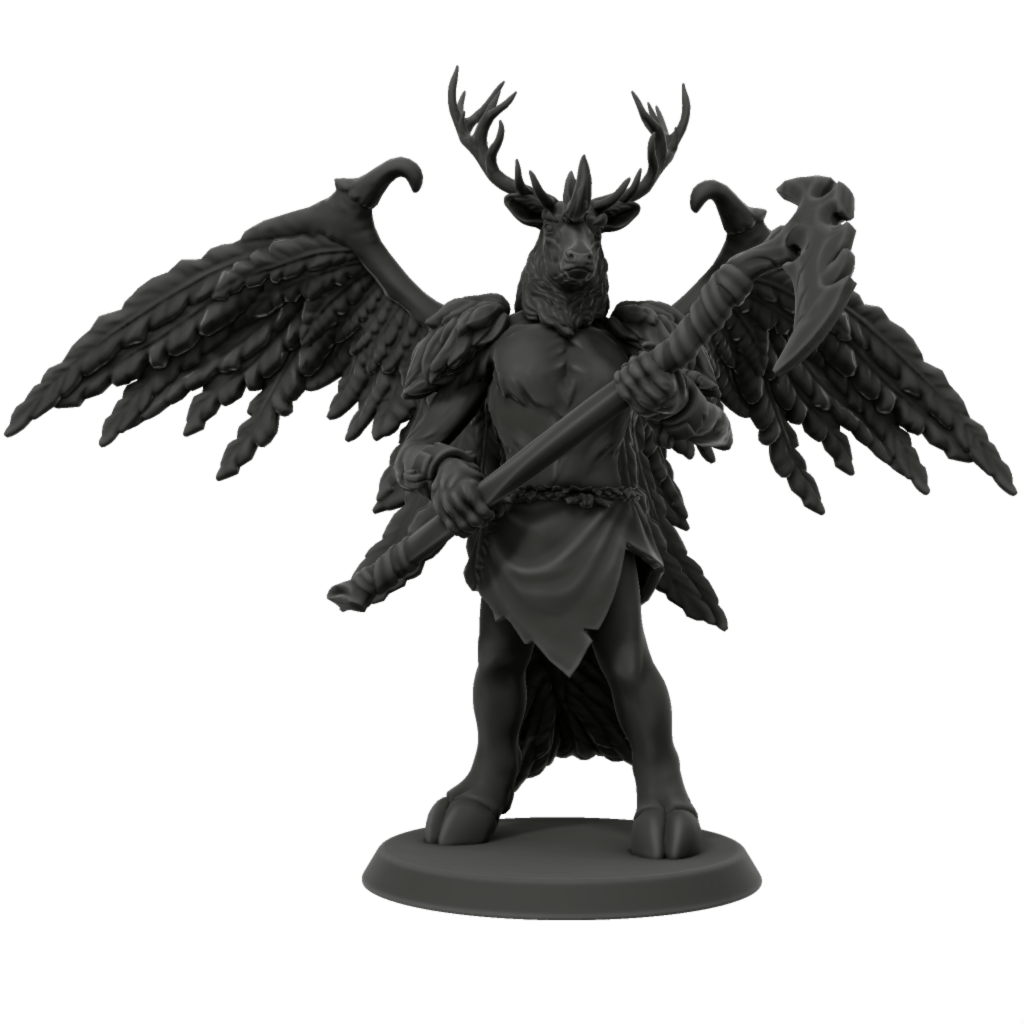
A major religion that behaves the most like a cult, the Path of Darkness is an adherence to the ways of malevolence and evil. Followers of the Path of Darkness believe that nothing should stand in the way of their personal gain, and feel that things such as ethics and morals only serve to hinder their own rise to power. Many of the priesthood of the Path of Darkness are warlocks who have patronage from a fiend, but there are a few divine spellcasters or fallen paladins in their order.

The core philosophy of the Path of Darkness is that through succumbing to the base Impulses of Cowardice, Hatred, and Falsehood, one may be able to acquire power at the cost of others’ prosperity and well-being. Anarchy and chaos can aid in acting upon these Impulses, but one must not reject the potential of abusing or corrupting the structures of law and order to obtain power.
Consequences should only be heeded if they would have an impact on survival or future goals, since too much impulsiveness can lead to unforeseen consequences that could halt one’s progress of self-empowerment. And, one must always be aware that there are those more powerful than oneself, both those who seek to stop you in the name of righteousness or who see you as unwanted competition. Ultimately, to dominate others who travel the Path of Darkness with oneself, one must promote in those weaker than you a false sense of unity, a false sense of trust, and a false sense of worth. Such goals can be achieved through use of prejudice or calls for anarchy, instilling apathy in some or wantonness in others, and promoting a ruthless or insane demeanor.
Undeath is just another means to acquiring power. Death is both a tool for acquiring power and a threat to ending power. If the physical body is of no consequence to oneself, then undeath sacrifices the body to maintain the mind and spirit.
Followers of the Path of Darkness may believe in higher powers, but if so, it is a bit of a conundrum. Higher powers may serve to confound one’s acquisition of power, or may manipulate one to further serve their own interests. The only deities worth following are ones who espouse beliefs in line with those of the Path of Darkness. Many who worship demons and devils follow the Path of Darkness.
The Exemplar of the Path of Darkness is the Overseer, who uses the Impulses to control the faithful and maintain power over all in the name of selfish supremacy.
Commandments of the Path of Darkness
- Cowards survive while the foolhardy brave die.
- Hate gives strength, and the hate of others is a useful tool.
- Lies grant control, and help protect the truth.
- Trick others into feeling trust, worth, and unity only from you.
- Unhindered malevolence is the birthright of the powerful.
Cults of Iorth
In Iorth, a cult consists of a group fanatically embracing a belief system whose practitioners do not draw upon any means of divine power. Usually, authority figures in such groups gain their displays of supernatural ability through use of arcane magic or psychic power, or even lack any power whatsoever and derive it from an object or location imbued with such power. Most cults do not thrive in the open, unable to stand against the genuine expressions of faith demonstrated in the Paths. Warlocks and profane soul blood hunters are usually devoted members of a cult who have made a pact with the revered entity for power in exchange for servitude. The Path of Darkness easily can qualify as a cult itself, though it is openly practiced in a few nations such as the Archduchy of Hellport and Koatlan.
With one or two exceptions, all of the cults mentioned are secret organizations, publicly presenting themselves as guilds, elite societies, fraternities/sororities, clubs, or the like. Many have a sinister element to them, but not all. However, all are essentially hostile to all other forms of belief, seeing themselves as the exclusive means to ultimate power, salvation, and achievement, and they are heavily reliant on the dogma or will of a “chosen prophet” or “select disciples.” A fair number of malign cults can be described as heretical splinter groups of the Path of Darkness, where its devout pay homage to an ambitious fiend or entity daring to challenge the primacy of Ur.
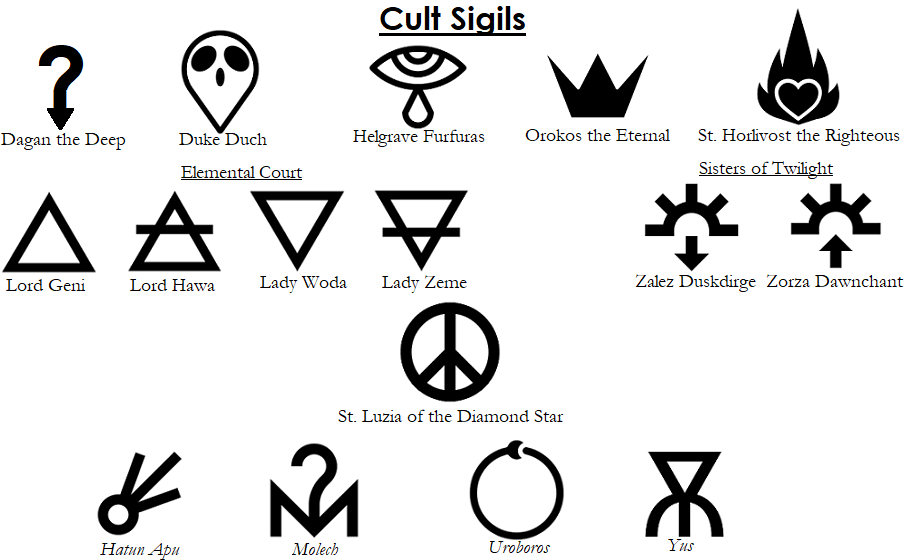
| Cult | Portfolio | AL | Glyph |
| Dagan the Deep | Deep waters and mystery | Any | Down query arrow |
| Duke Duch | The dead and undeath | Any | Ghost |
| Helgrave Furfuras | Secrets and conspiracies | Any | Bleeding eye |
| Lord Geni | Elemental fire and wildfires | Any | Fire symbol |
| Lord Hawa | Elemental air and tornadoes | Any | Air symbol |
| Lady Woda | Elemental water and floods | Any | Water symbol |
| Lady Zeme | Elemental earth and earthquakes | Any | Earth symbol |
| Orokos the Eternal | Perfection and eternity | Any | Crown |
| St. Horlivost the Righteous | Zeal and fervor | Any | Burning heart |
| St. Luzia of the Diamond Star | Peace, hope, and unity | Any Good | Peace symbol |
| Sister Dusk | Dusk, grief, tragedy, and endings | Any | Sunset |
| Sister Dawn | Dawn, mirth, comedy, and beginnings | Any | Sunrise |
| NPC Cult | Portfolio | AL | Glyph |
| Hatun Apu | God-Emperor of Totlan | Any Neutral | Comet |
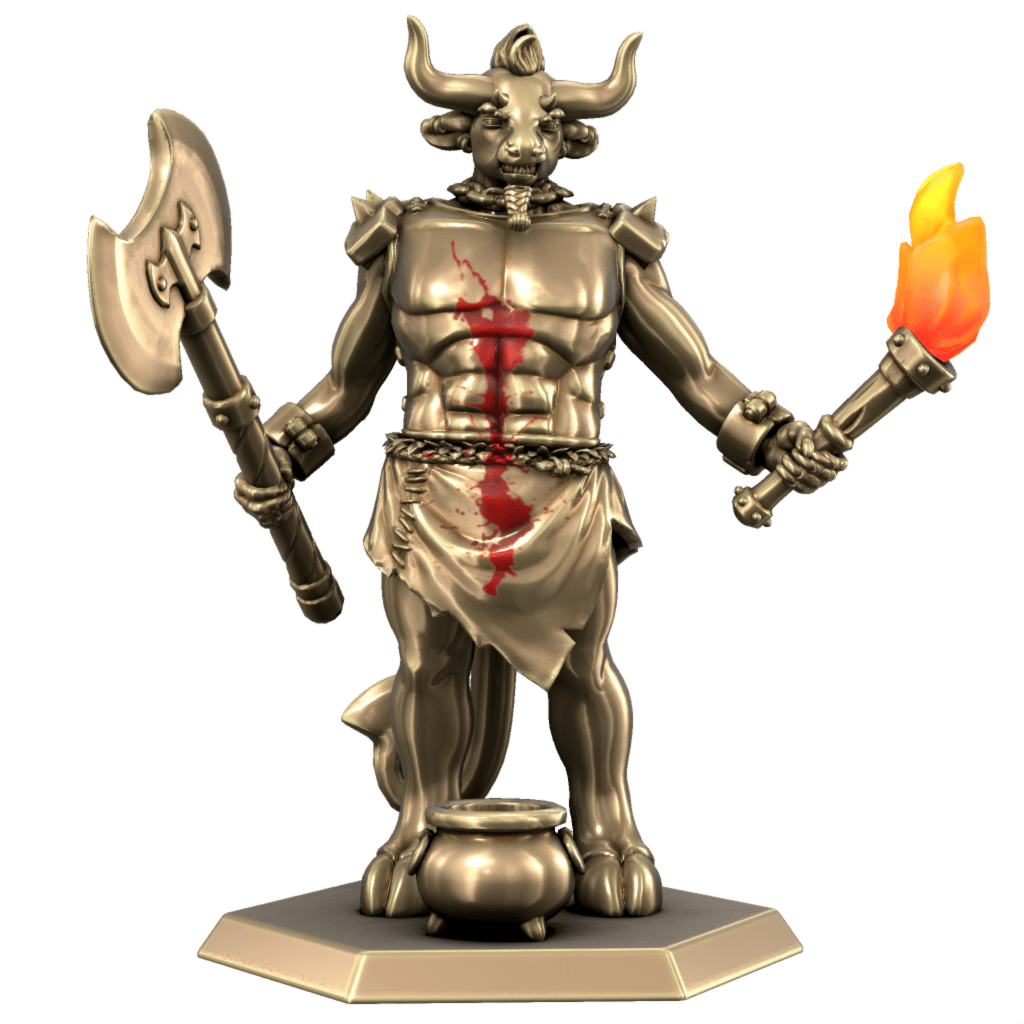
| Molech | Frenzy and bloodlust | Any Evil | Pit of sacrifice |
| Uroboros | Serpents and hunger | Any Evil | Serpent biting tail |
| Yus | Void and entropy | Any Evil | Big yus letter |



Example: The Cult of Yus

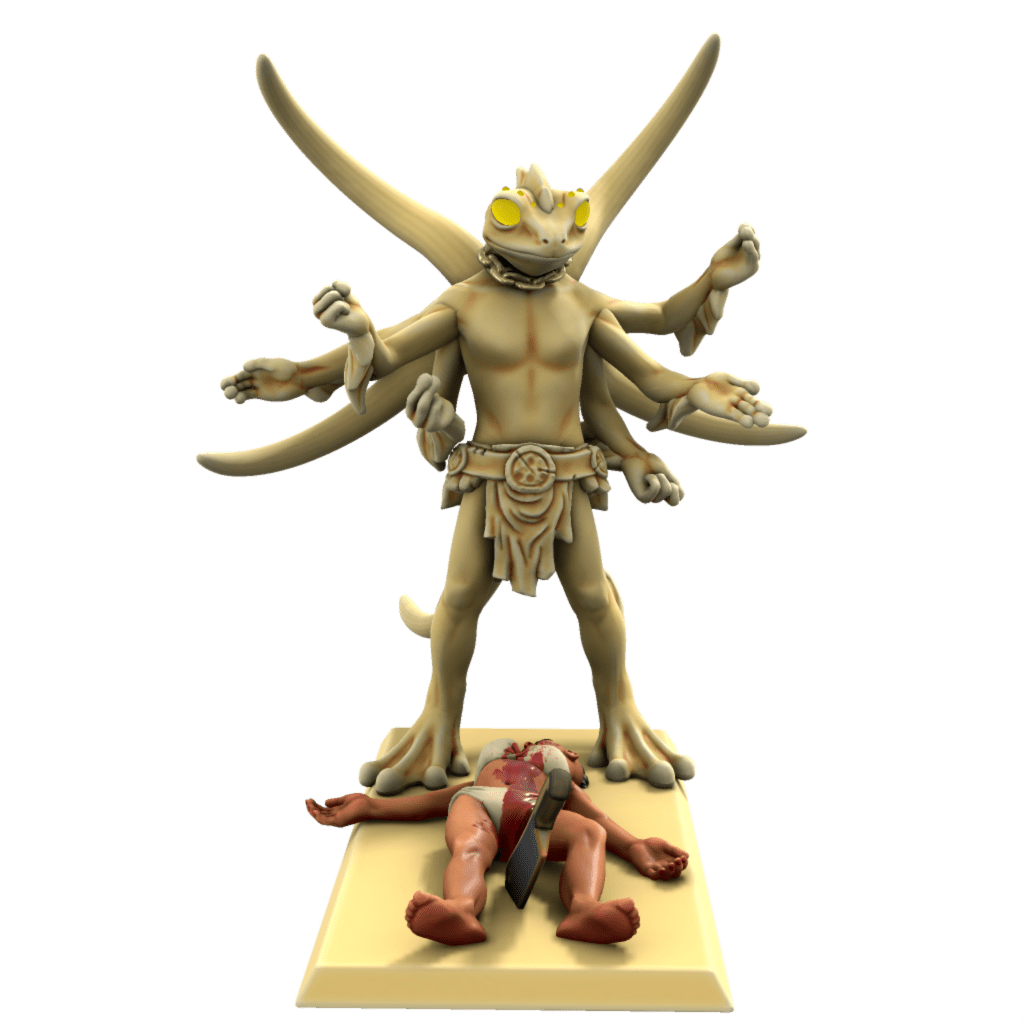
One example of a cult in Iorth is the Cult of Yus. This cult reveres a great old one known by many names: the Gilded Emperor, the King in Jonquil, the Master of the Saffron Sign, Lord of Karkosa, He Who Shall Never Be Named. In any event, the cult is highly secretive, allegedly seeking to summon their master to the mortal realm so he may reign and feed in horrific glory.
Those who become involved in this cult, especially those with a position of power, are slowly transformed over time. Many notice that their eyes turn to a sickly yellow color, and over time, they become solid yellow orbs with a small black pupil. In addition, their hands and feet become clawed, their teeth become sharp and pointed, and in some cases, small fiendish horns erupt from their brows.
 Iorthbound